

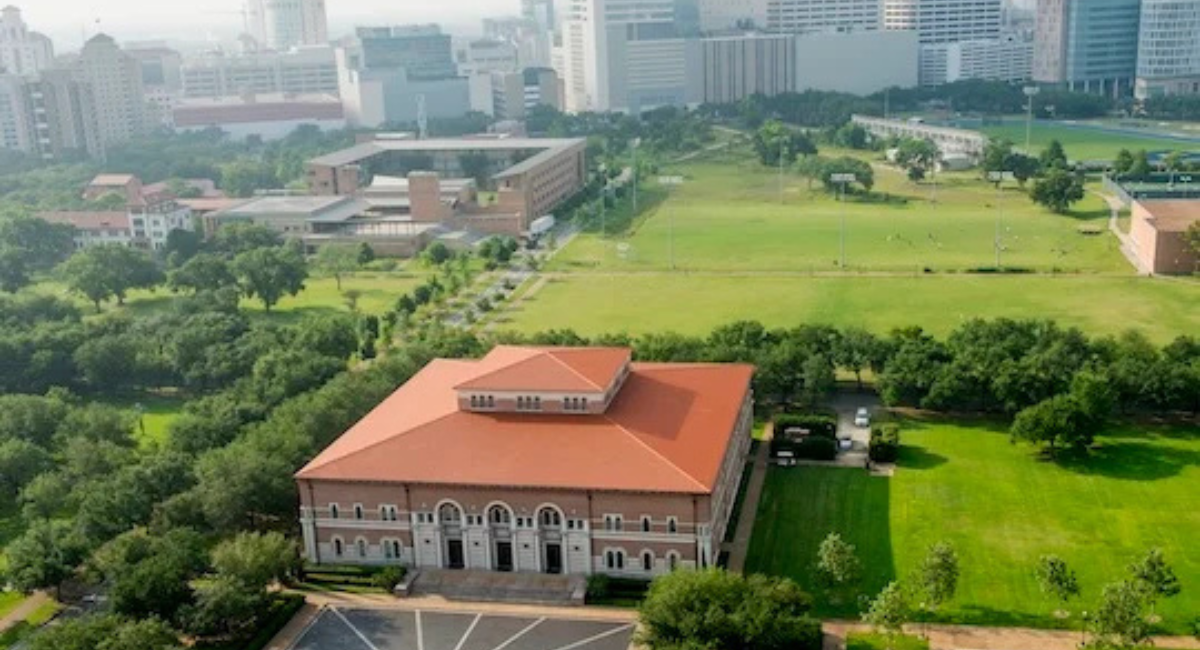
Rice University’s Baker Institute for Public Policy is preparing a wide-ranging autumn programme that will bring global leaders, foreign policy scholars, policymakers and science innovators together in Houston. The schedule reflects the institute’s longstanding role as a forum for debate on international affairs, energy, technology, health and public policy, while also highlighting the growing links between scientific innovation and geopolitical decision-making. The institute says its work is centred on independent, evidence-based policy analysis addressing challenges facing the United States, Texas and the wider world.
Why is the Baker Institute’s autumn calendar attracting attention?
The Baker Institute’s autumn calendar is attracting attention because of the breadth of subjects and expertise expected to feature in its programming. Rather than focusing on a single policy area, the institute brings together specialists working across foreign affairs, national security, energy, healthcare, technology and science policy.
That interdisciplinary approach is increasingly significant as traditionally separate policy questions become more closely connected. Energy security, technological competition, public health and international relations now frequently overlap, requiring policymakers to consider economic, scientific and geopolitical consequences at the same time.
The institute’s 2024 annual report said it hosted more than 100 public events during that year, bringing together leaders from academia, industry and government. Its experts also received more than 40,000 citations in leading outlets worldwide, underlining the institute’s influence in public policy discussions.
What role will foreign policy scholars play in the programme?
Foreign policy scholars are expected to provide analysis of some of the international challenges shaping governments and businesses. The Baker Institute has established expertise in areas including US foreign relations, China, the Middle East, Russia and Ukraine, energy security and international economic policy.
The institute has previously hosted prominent figures including former CIA Director David Petraeus, former US Secretary of State Condoleezza Rice and former US Ambassador to Russia John Sullivan in discussions about the changing geopolitical environment.
Its research also examines the economic and security consequences of strategic competition between major powers. A Baker Institute analysis of China’s economic policies, for example, examined how Beijing’s approach to investment, technology and national security could affect the United States and its international partners.
Such discussions are particularly relevant as governments reassess supply chains, critical technologies, research security and economic relationships amid heightened international competition.
How does science and technology feature in the Baker Institute’s work?
Science and technology policy has become an increasingly important part of the Baker Institute’s agenda. The institute’s Science and Technology Policy Program examines how advances in research and emerging technologies interact with government policy, national security and economic competitiveness.
Recent work has included research security, artificial intelligence, neuroscience and the broader implications of technological competition. The institute has also examined how scientific innovation can contribute to economic resilience and national security.
The importance of that agenda is reinforced by wider developments at Rice University. The university’s newly established Rice Brain Institute brings together neuroengineering, neuroscience and brain-and-society research, with the aim of translating scientific discoveries into practical applications.
This convergence between research and policymaking is likely to remain an important theme as policymakers grapple with questions surrounding artificial intelligence, biotechnology, advanced computing and the future of healthcare.
Why is Houston an important setting for these discussions?
Houston provides a distinctive backdrop for discussions involving foreign policy, energy and scientific innovation. The city is a major international business centre and home to a substantial research and healthcare ecosystem, including the Texas Medical Center.
Rice University’s location gives the Baker Institute access to academic researchers while placing its policy work within one of the United States’ major energy and technology centres. The institute’s own annual report describes Houston as an international hub of diversity, innovation and industry leadership.
The city’s economic profile also makes questions about energy security, industrial policy and technological development particularly relevant. Baker Institute researchers have repeatedly examined issues affecting energy markets, including the future of low-carbon technologies and electricity reliability in Texas.
What issues could shape the wider policy debate?
Several major policy questions are likely to remain prominent across the institute’s work. International security is one, particularly as governments continue to assess the consequences of conflicts, strategic competition and changing alliances.
Energy is another major area. The Baker Institute’s Center for Energy Studies has produced research on energy markets, sanctions, electricity reliability, sustainability and global energy value chains. The institute’s 2024 annual report noted that its eighth annual Energy Summit brought together domestic and international perspectives on energy policy and low-carbon pathways.
Technology will also remain central. Competition over artificial intelligence, advanced computing, biotechnology and scientific research is increasingly connected to economic and national security strategies.
Healthcare and brain science add another dimension. Baker Institute researchers have explored the concept of “brain capital”, linking neuroscience, workforce productivity, innovation and economic resilience.
How could the programme benefit students and the wider public?
The institute’s events provide opportunities for students, researchers, policymakers and members of the public to engage directly with specialists working on major international and domestic issues.
That educational role is consistent with the Baker Institute’s position within Rice University. In 2024, more than 60 students participated in the institute’s internship and fellowship programmes, gaining experience in policy research, advocacy and communications.
The institute also contributes to Rice’s Master of Global Affairs programme, where Baker Institute faculty participate in teaching and supervise student research. The programme emphasises applying academic research to real-world policy questions, reflecting Houston’s position as a centre of international business and diplomacy.
What happens next for the Baker Institute’s autumn programme?
The autumn programme will provide another opportunity for the Baker Institute to connect policymakers and researchers with audiences in Houston and beyond. As international tensions, technological change and economic uncertainty continue to reshape government priorities, the value of forums capable of bringing different disciplines together is likely to increase.
The institute’s approach also reflects a broader shift in policy research, where questions once treated separately are increasingly examined through economic, scientific, security and social lenses. For Houston, that creates an opportunity to strengthen its position as a meeting point for international policy, energy expertise and scientific innovation.
The coming months should therefore offer a useful indication of which global risks and emerging technologies are commanding the attention of researchers and policymakers. Readers following foreign policy, science and technology, energy security and international economics will have particular reason to monitor the Baker Institute’s autumn events as they develop.