

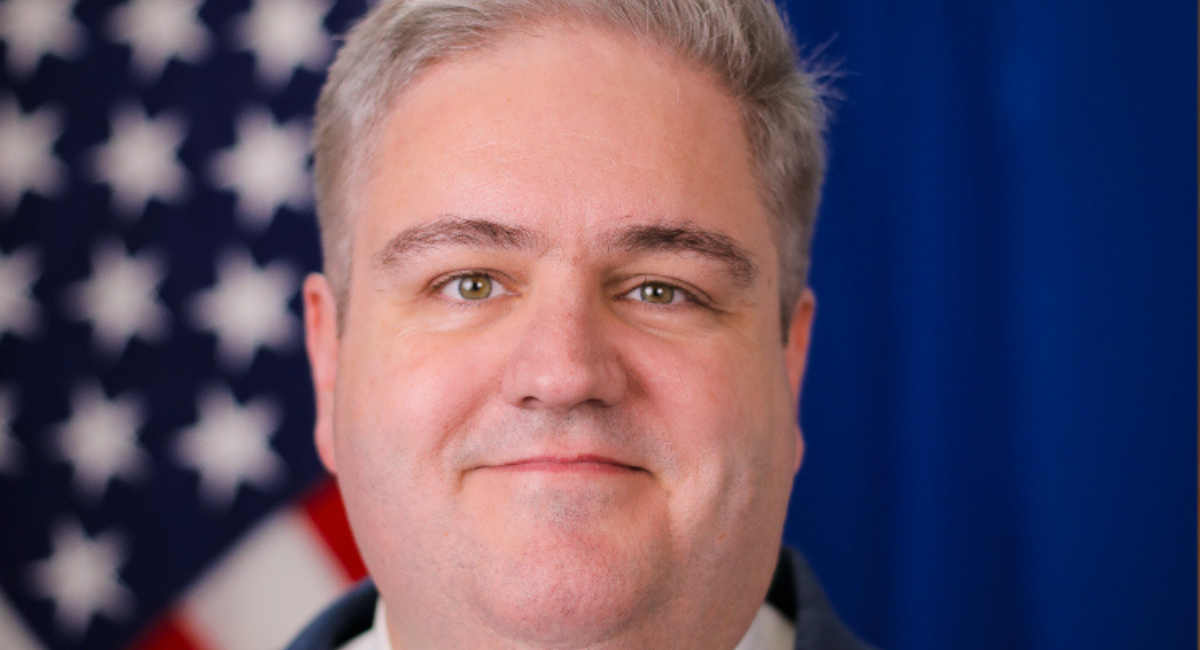
Jerrier (Jerry) Ismail has taken up his position as the new US Consul General in Thessaloniki, succeeding Elizabeth K. Lee and beginning a diplomatic assignment focused on northern Greece and the wider Balkan region. Ismail, a career US Foreign Service officer, arrived in Thessaloniki in August 2023 after holding senior positions in Washington and overseas, including work on human rights, regional security and political-economic affairs. His appointment comes as Greece and the United States continue to deepen cooperation on defence, energy, trade, investment and regional stability.
Why Is the New US Consul General in Thessaloniki Important?
The arrival of the new US Consul General in Thessaloniki matters because the city serves as an important diplomatic, commercial and strategic centre in northern Greece. The US Consulate General works alongside the US Embassy in Athens on a broad bilateral agenda, while Thessaloniki’s location gives American diplomats access to developments across Macedonia, Thrace and the wider Balkans.
The Greek Ministry of Foreign Affairs describes relations between Greece and the United States as strong and highlights Greece’s role as a reliable ally and stabilising force in the wider region. The two countries have developed cooperation in areas ranging from security and defence to economic relations and energy.
Thessaloniki’s geographical position also gives the post wider significance. The city is close to the Western Balkans and is an important transport and commercial hub connecting Greece with neighbouring countries. For Washington, engagement in northern Greece therefore extends beyond local diplomatic relations.
Who Is Jerrier Ismail and What Experience Does He Bring?
Jerrier Ismail is a career member of the US Foreign Service with experience in diplomatic assignments covering Europe, the Middle East and Central Asia. Before arriving in Thessaloniki, he served as human rights chief in the US State Department’s Bureau of International Organization Affairs.
In that role, Ismail was involved in the US campaign for election to the UN Human Rights Council and coordinated diplomatic outreach ahead of a United Nations vote concerning Russia’s suspension from the council. He also helped launch the first US joint statement on racial justice, according to information published following his appointment.
His Washington experience also includes work as a special assistant in the Bureau of Conflict and Stabilization Operations and as a senior Australia desk officer. Earlier in his career, he served as an Albania desk officer, where his responsibilities included supporting Albania’s Euro-Atlantic integration and its path towards NATO membership.
His overseas postings have included political-economic work in Turkmenistan, service as deputy political-economic chief in Montenegro, an economic officer position in Kosovo, and human rights assignments in the Czech Republic and Saudi Arabia. He began his Foreign Service career in 2004.
What Is Ismail’s Background in Languages and Education?
Ismail studied political science and economics at the State University of New York at Albany, graduating with honours, before earning a Juris Doctor degree from Emory University.
His language skills are particularly relevant to a diplomatic posting in southeastern Europe. He is fluent in Czech and Serbo-Croatian and has proficiency in Arabic, Greek and Russian. His background gives him experience across several regions where political, economic and security issues overlap.
Ismail comes from New York State’s Hudson Valley region. He moved to Greece with his wife, Lejla, an international development expert, and their two children.
What Priorities Could Shape the US Consulate’s Work?
The work of the US Consulate General in Thessaloniki is likely to remain closely linked to the broader US-Greek relationship, particularly regional security, economic cooperation and engagement with northern Greece.
The US and Greece established a Strategic Dialogue in 2018 covering regional cooperation, defence and security, trade and investment, energy, law enforcement, counterterrorism and people-to-people ties. Greece’s position as a NATO member and its geographical location in the Eastern Mediterranean have made it an important US partner in regional security and energy diversification.
Economic links are another important element. Northern Greece has attracted attention from businesses and investors, while Thessaloniki is home to a major port, universities and a growing technology and innovation ecosystem. In February 2026, Ismail participated in the American-Hellenic Chamber of Commerce’s Thessaloniki New Year’s Reception, alongside business leaders, government representatives, academics and other senior figures.
How Has Ismail Engaged With Northern Greek Officials?
Ismail’s early engagement in the post included meetings with senior officials responsible for northern Greece. In August 2023, shortly after arriving, he met Stathis Konstantinidis, Greece’s then Deputy Minister of Interior responsible for Macedonia and Thrace.
The discussions covered issues concerning the development of northern Greece and included regional economic and cross-border cooperation. The meeting formed part of Ismail’s initial outreach after assuming his diplomatic responsibilities.
He also met Apostolos Tzitzikostas, then governor of Central Macedonia, shortly after his arrival. The meeting focused on matters of mutual interest and marked another early contact between the new US consul general and regional authorities.
These engagements illustrate the local dimension of the consul general’s role. The position is not limited to consular services but also involves maintaining relationships with government officials, businesses, universities, civil society organisations and other institutions across northern Greece.
Why Does Thessaloniki Matter to US-Greece Relations?
Thessaloniki has long played an important role in the United States’ engagement with northern Greece. The US maintains a Consulate General in the city, while the embassy in Athens handles the wider national diplomatic relationship.
US-Greek relations themselves have deep historical roots. The United States appointed its first consul to Greece in 1837, while formal diplomatic relations between the two countries were established in 1868. The relationship expanded significantly after the Second World War, including through American assistance under the Marshall Plan.
Today, the relationship encompasses defence cooperation, economic ties, energy security, regional diplomacy and cultural connections. The United States also works with Greece on issues affecting the Western Balkans and the Eastern Mediterranean, making northern Greece an important geographic point of contact.
What Could Happen Next for the US Consulate in Thessaloniki?
The next phase of Ismail’s tenure is expected to involve continued engagement with Greek national and regional authorities, businesses, universities and international organisations. His previous experience in human rights, economic diplomacy and regional affairs provides a broad background for managing the diverse responsibilities of the post.
Recent appearances also indicate that his work remains closely connected to economic and civic networks in Thessaloniki. His participation in the American-Hellenic Chamber of Commerce’s 2026 events demonstrates the continuing role of the consulate in strengthening links between American and Greek institutions.
The wider strategic environment will also remain important. Greece’s role within NATO, its proximity to the Western Balkans and its position in the Eastern Mediterranean mean that developments involving security, energy, transport and regional diplomacy are likely to remain relevant to the US diplomatic mission.
What Does the Appointment Mean for Northern Greece?
The appointment of Jerrier Ismail places an experienced US Foreign Service officer at the centre of American diplomatic activity in northern Greece. His career has covered international organisations, human rights, economic affairs, political diplomacy and regional security, giving him experience across several issues relevant to the region.
For northern Greece, the significance of his tenure will ultimately be measured through practical diplomatic engagement rather than the appointment itself. Continued US-Greek cooperation on trade, investment, energy, defence and regional stability could strengthen Thessaloniki’s role as a bridge between Greece, the Balkans and the wider transatlantic community.
As Ismail’s tenure progresses, readers will be watching how the US Consulate responds to changing regional security conditions, expanding economic opportunities and developments across the Western Balkans and Eastern Mediterranean. Those issues are likely to determine the broader significance of the US diplomatic presence in Thessaloniki in the years ahead.