

The European Union is facing a fresh dispute over how it conducts foreign policy, as France, Germany and several other member states push for changes aimed at making the bloc more effective internationally. The disagreement centres on the future of the European External Action Service (EEAS), the role of EU foreign policy chief Kaja Kallas and the continued use of national vetoes. The dispute comes as Europe faces mounting security pressures from Russia, uncertainty over transatlantic relations and instability in the Middle East.
Why is EU foreign policy facing renewed divisions?
The latest dispute reflects a longstanding problem within the EU: member states share many economic interests but can struggle to agree on sensitive geopolitical questions.
Foreign policy decisions can require unanimity, giving individual governments considerable influence over the bloc’s collective position. Euractiv reported that this has repeatedly created difficulties, particularly over sanctions against Russia and Israeli settlers in the West Bank. Hungary’s previous opposition to sanctions demonstrated how the position of one member state could delay or prevent common action.
The issue has become more pressing as Europe’s strategic environment has deteriorated. Russia’s continuing war against Ukraine, hybrid threats and uncertainty surrounding US policy have increased pressure on European governments to act more quickly and coherently.
At an informal meeting of EU foreign ministers in Wicklow, Ireland, on 2 September, Kallas acknowledged that Europe possesses significant economic and political leverage but does not always use it in a coordinated way.
What reforms are France and Germany proposing?
France and Germany have backed changes to the EU’s foreign policy machinery, with Germany this week supporting an effort to restructure the EEAS by moving significant functions into the European Commission.
The objective is to reduce duplication between the EU’s diplomatic service and the Commission, which already controls policy areas with substantial external implications, including trade, energy, development and humanitarian assistance.
The Franco-German approach would give the High Representative a stronger coordinating role inside the Commission while leaving core defence and crisis-management responsibilities outside the proposed restructuring. The initiative is part of a wider attempt to make European external action more coherent.
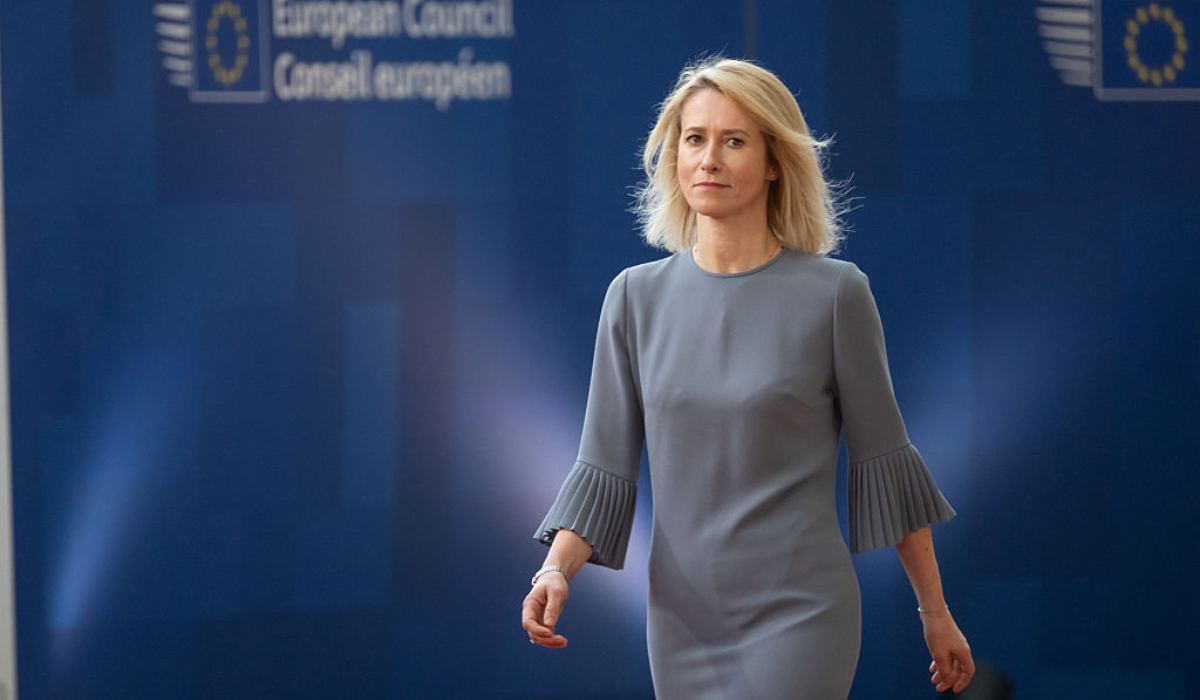
The debate is partly institutional, but it also concerns political authority. Kallas currently serves both as High Representative for Foreign Affairs and Security Policy and as a Vice-President of the European Commission. Her responsibilities are therefore divided between EU institutions and national governments.
Why does Kaja Kallas oppose the proposed changes?
Kallas has argued that the EU’s main problem is not necessarily the institutional structure itself but how effectively it is used.
Speaking after the foreign ministers’ meeting in Ireland, she said there was broad support among ministers for the current institutional arrangement. She also stressed that member states wanted to retain their role in steering European foreign policy.
Her position reflects concerns that a major redistribution of responsibilities could weaken the EEAS rather than solve the problems facing European diplomacy.
Kallas has instead encouraged governments to make better use of existing mechanisms, including constructive abstention and other tools already provided for under EU treaties. The approach would seek to reduce deadlock without immediately redesigning the entire institutional framework.
The disagreement therefore involves more than administrative reform. It raises questions about who should control Europe’s foreign policy and how much authority should sit with EU institutions compared with national governments.
How important is the EU’s foreign policy veto?
The veto remains one of the most consequential obstacles to a unified European foreign policy.
Under the existing arrangements, member states can prevent consensus on important foreign and security policy decisions. While this protects national governments on issues they regard as fundamental, it can also make collective European action slower.
A group of 11 EU countries — Austria, Belgium, Denmark, Finland, France, Germany, Luxembourg, the Netherlands, Romania, Spain and Sweden — has backed proposals aimed at speeding up foreign policy decisions, including wider use of qualified majority voting.
Moving towards qualified majority voting would represent a significant political change. Instead of requiring every government to agree, decisions could be adopted when a defined majority of member states and population thresholds are met.
Supporters argue this could prevent individual governments from repeatedly blocking common positions. Opponents, however, are likely to remain concerned about losing national control over decisions involving security, sanctions and international relations.
What does the dispute mean for European security?
The timing of the argument is significant because Europe is confronting several security challenges simultaneously.
At the Wicklow meeting, ministers discussed Ukraine, Russia and the growing threat posed by sabotage, cyber-attacks and espionage. Kallas said the EU had summoned Russia’s representative and was moving towards additional sanctions following what European governments described as increasingly serious hybrid threats.
European governments are also attempting to increase their defence capabilities. Kallas said Europe was investing more in defence than before but warned that increased spending alone would not guarantee that the continent could close existing military capability gaps.
The foreign policy debate therefore comes alongside a broader discussion about Europe’s strategic autonomy. Governments increasingly want the EU to be capable of responding to crises even when agreement with Washington is difficult or US priorities differ from those of European capitals.
Why does the EEAS reform matter beyond Brussels?
The EEAS is effectively the EU’s diplomatic arm and plays an important role in coordinating relations with countries outside the bloc.
Its future matters because the EU has considerable influence through instruments extending beyond traditional diplomacy. Kallas highlighted trade, development aid, visas, enlargement, energy and sanctions as sources of European leverage.
If these tools remain divided between different institutions, governments could struggle to deploy them as part of a single strategy. Conversely, concentrating more powers within the Commission could improve coordination while creating new concerns about institutional balance.
That tension explains why the reform debate has attracted support from several major European capitals while also generating resistance from those who fear excessive centralisation.
What happens next for EU foreign policy?
The immediate debate is unlikely to produce a simple settlement. The proposals remain politically sensitive, particularly because changes affecting the EU’s foreign policy decision-making system could alter the balance between national sovereignty and collective European action.
The European Commission and member states are expected to continue examining how the EEAS, the Commission and the High Representative’s responsibilities should interact. At the same time, pressure for qualified majority voting is likely to remain part of the discussion as governments confront decisions involving sanctions, Russia and other international crises.
For Europe, the central question is whether greater unity can be achieved without creating a new institutional struggle. The EU has significant economic, diplomatic and regulatory power, but converting that influence into a consistent foreign policy requires governments to agree on both objectives and decision-making methods. As geopolitical pressure increases, the dispute over EU foreign policy is therefore likely to become an increasingly important test of the bloc’s ability to act collectively.