

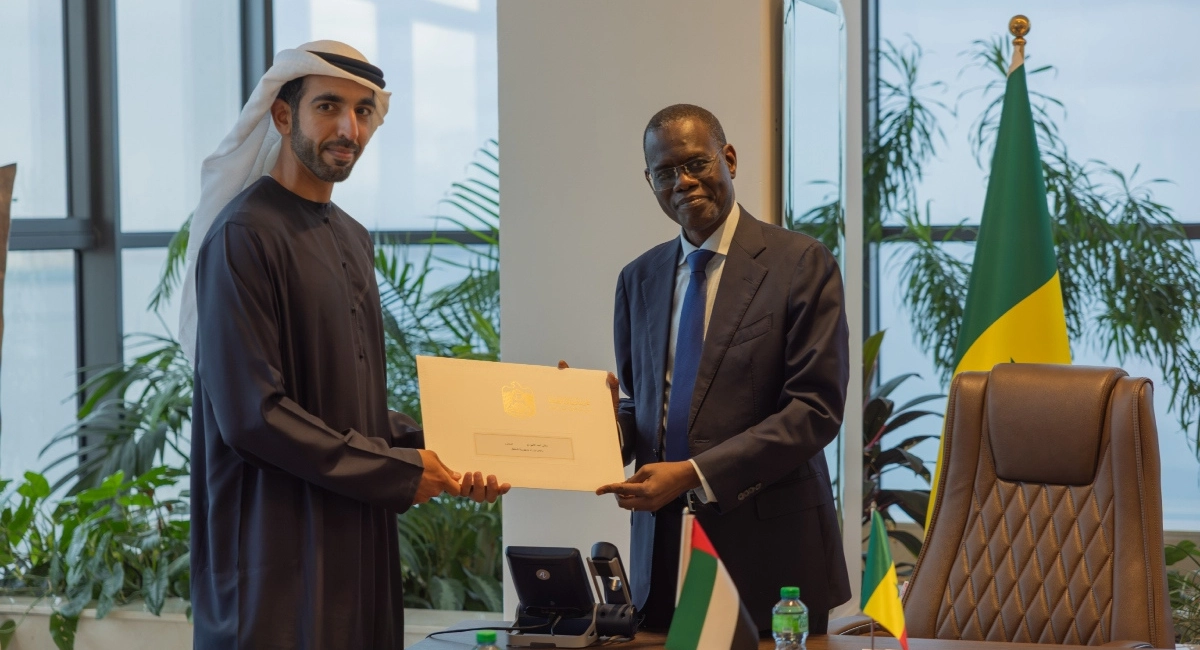
Senegal’s Prime Minister has received a written message from the President of the United Arab Emirates (UAE) during a high-level diplomatic meeting in Dakar, underlining the strengthening partnership between the two nations. The message was delivered by Sheikh Shakhboot bin Nahyan Al Nahyan, UAE Minister of State, during discussions that focused on expanding bilateral relations and exploring opportunities for closer cooperation across key sectors. The meeting reflects the UAE’s continuing diplomatic engagement in Africa as both countries seek to deepen political dialogue, economic collaboration and investment partnerships.
Why Did the UAE Deliver a Written Message to Senegal’s Prime Minister?
The written message from the UAE President formed part of ongoing diplomatic exchanges between Abu Dhabi and Dakar aimed at reinforcing bilateral relations. Such correspondence is a common feature of high-level diplomacy and often serves to reaffirm political commitments, strengthen strategic partnerships and encourage continued cooperation on shared priorities.
The message was delivered during an official meeting in Dakar by Sheikh Shakhboot bin Nahyan Al Nahyan, who oversees the UAE’s relations with African nations. Although the detailed contents of the communication were not publicly disclosed, officials indicated that it reflected the leadership’s commitment to enhancing ties with Senegal across political, economic and development sectors.
The exchange also highlights the increasing importance both governments place on maintaining regular dialogue amid evolving regional and international economic challenges.
What Was Discussed During the Meeting in Dakar?
Discussions centred on strengthening bilateral cooperation and identifying new opportunities for collaboration between Senegal and the UAE. Officials reviewed existing partnerships while exploring avenues for expanding cooperation in areas including trade, investment, infrastructure, renewable energy, agriculture and sustainable development.
The meeting also addressed broader regional developments and issues of mutual interest, reflecting the growing strategic significance of cooperation between Gulf states and African economies.
Both delegations reaffirmed their shared objective of promoting economic growth through stronger commercial partnerships and increased investment flows.
Who Is Sheikh Shakhboot bin Nahyan Al Nahyan?
Sheikh Shakhboot bin Nahyan Al Nahyan serves as the UAE Minister of State and plays a leading role in the country’s diplomatic engagement across Africa. His portfolio focuses on strengthening political, economic and development partnerships with African governments while supporting the UAE’s broader foreign policy objectives.
Over recent years, Sheikh Shakhboot has undertaken numerous official visits across the continent, reflecting Abu Dhabi’s expanding diplomatic footprint and its emphasis on long-term partnerships based on investment, development assistance and economic cooperation.
His visit to Senegal continues this broader diplomatic strategy, which seeks to build stronger institutional links with African nations.
Why Is Senegal an Important Partner for the UAE?
Senegal has emerged as one of West Africa’s most stable democracies and one of the region’s fastest-growing economies. Its strategic Atlantic coastline, improving infrastructure and expanding energy sector make it an increasingly attractive destination for international investors.
The country is also expected to play a larger role in global energy markets following the launch of offshore oil and natural gas production. Combined with ongoing infrastructure projects and reforms designed to attract foreign investment, Senegal presents significant opportunities for international partners.
For the UAE, strengthening relations with Senegal supports broader ambitions to expand economic engagement across Africa while enhancing trade connectivity between the Gulf and the continent.
How Have UAE–Senegal Relations Developed in Recent Years?
Relations between the UAE and Senegal have steadily strengthened through diplomatic exchanges, development cooperation and growing investment interest. The UAE has increased its engagement across Africa through initiatives supporting infrastructure, renewable energy, healthcare, education and humanitarian assistance.
Trade links between the two countries have also expanded, with increasing interest in logistics, ports, aviation, agriculture and financial services. Government officials from both sides have frequently emphasised the importance of creating favourable conditions for private-sector investment.
The latest meeting in Dakar builds upon previous diplomatic contacts aimed at broadening cooperation beyond traditional government-to-government relations.
What Does This Mean for Economic Cooperation?
The discussions could pave the way for additional investment opportunities and commercial partnerships between businesses in both countries. The UAE has become one of the Middle East’s most active investors across Africa, with Emirati companies participating in infrastructure development, transport networks, renewable energy projects and logistics operations.
Senegal’s economic development plans align with many of the sectors where UAE investors have demonstrated strong interest. Continued political dialogue may therefore encourage greater business confidence and facilitate future agreements supporting sustainable economic growth.
While no specific investment announcements accompanied the meeting, officials indicated that both governments remain committed to expanding mutually beneficial economic cooperation.
How Does This Fit Into the UAE’s Wider Africa Strategy?
The UAE has significantly expanded its diplomatic and commercial presence across Africa over the past decade. The country’s foreign policy increasingly emphasises strategic partnerships that combine political engagement with trade, investment and development initiatives.
Africa has become an important destination for Emirati investment, particularly in ports, logistics, renewable energy, food security and infrastructure. High-level visits by senior UAE officials have become increasingly frequent as Abu Dhabi seeks to strengthen relationships with governments across the continent.
The meeting in Dakar reflects this broader approach, demonstrating the UAE’s continued commitment to building long-term partnerships with African nations.
What Happens Next Following the Meeting?
Officials from both countries are expected to continue discussions through diplomatic and ministerial channels to translate political commitments into practical cooperation. Future engagements could include additional bilateral meetings, business forums and investment initiatives designed to deepen economic relations.
Observers will also watch for potential agreements in sectors such as infrastructure, energy, agriculture and trade facilitation as both governments seek to expand existing partnerships.
Continued dialogue between Senegal and the UAE is likely to reinforce broader regional cooperation while supporting economic development objectives shared by both nations.