

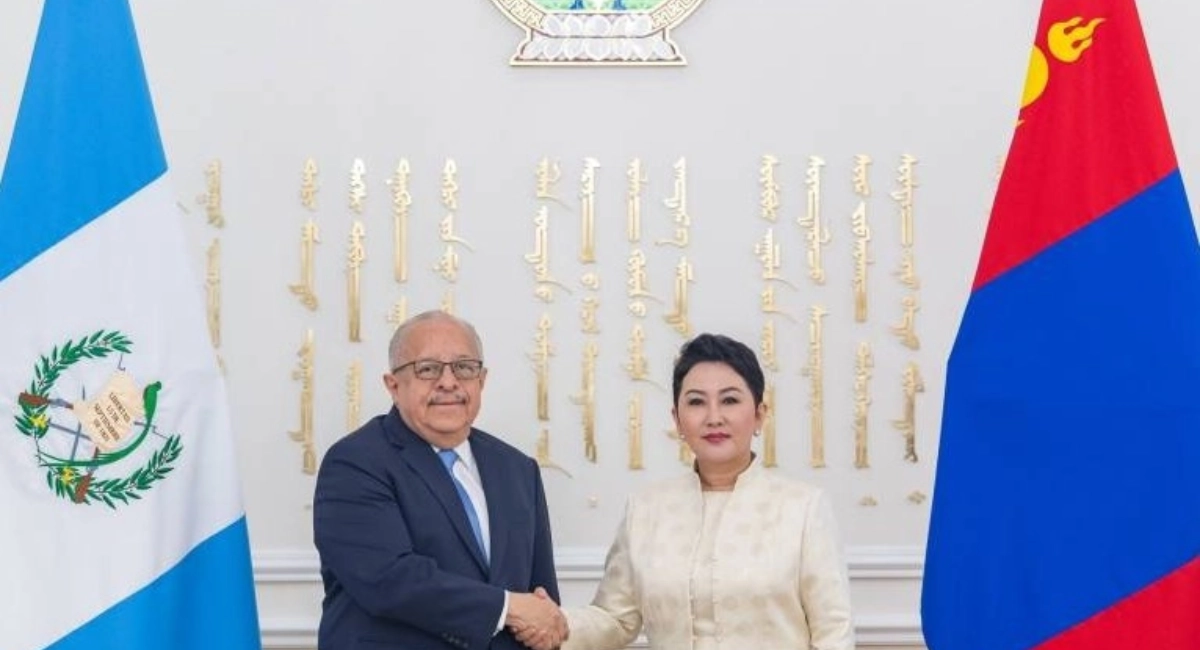
The foreign ministers of Mongolia and Guatemala have held high-level diplomatic talks aimed at strengthening bilateral relations and expanding cooperation across a range of shared interests. The meeting underscored both countries’ commitment to enhancing political dialogue, exploring new economic opportunities and deepening collaboration in international forums. Although Mongolia and Guatemala are separated by vast geographical distance, both governments highlighted the importance of building stronger partnerships based on mutual respect, international law and sustainable development.
The discussions form part of broader diplomatic efforts by both nations to diversify international partnerships, promote economic cooperation and reinforce engagement within the global community. Officials described the meeting as constructive, with both sides expressing optimism about future collaboration.
Why Did Mongolia and Guatemala Hold High-Level Diplomatic Talks?
The meeting between the foreign ministers reflected ongoing efforts by both governments to expand their diplomatic networks beyond traditional regional partners. In recent years, many middle-sized and developing nations have sought to strengthen ties with countries in different continents to create new opportunities for trade, investment and cultural exchange.
Both Mongolia and Guatemala have increasingly emphasised multilateral diplomacy while pursuing balanced foreign policies. The talks demonstrated a shared willingness to identify practical areas of cooperation despite the geographical distance separating East Asia and Central America.
Officials indicated that maintaining regular diplomatic dialogue allows both countries to exchange views on regional developments and international challenges while identifying areas where bilateral cooperation could produce mutual benefits.
What Were the Main Topics Discussed During the Meeting?
The foreign ministers reviewed the current state of bilateral relations and explored ways to strengthen cooperation in several sectors.
Political dialogue featured prominently, with both sides reaffirming their commitment to maintaining friendly relations based on respect for sovereignty and international cooperation. Discussions also examined opportunities to increase economic engagement through trade, investment and business exchanges.
Education, culture and people-to-people connections were identified as important areas for future development. Expanding academic partnerships and encouraging cultural exchanges were viewed as effective ways of strengthening long-term understanding between both societies.
The ministers also exchanged views on international affairs, including cooperation within multilateral organisations. Such discussions are increasingly common as countries seek coordinated approaches to global issues including sustainable development, climate change, food security and economic resilience.
How Important Are Bilateral Relations Between Mongolia and Guatemala?
Although bilateral trade between Mongolia and Guatemala remains relatively modest, diplomatic engagement provides a foundation for broader cooperation over time.
For Mongolia, expanding relations with countries outside Asia supports its long-standing foreign policy objective of diversifying international partnerships. Establishing stronger diplomatic and economic links with Latin American nations offers opportunities for broader global engagement.
For Guatemala, developing closer ties with Asian countries can contribute to expanding commercial relationships, attracting investment and promoting international cooperation across multiple sectors.
Diplomatic experts frequently note that smaller and medium-sized economies benefit from maintaining a diverse network of international partners capable of supporting trade, investment and political cooperation.
What Could Economic Cooperation Mean for Both Countries?
Economic cooperation was understood to be one of the most significant areas of potential growth.
Trade officials from both countries may now explore opportunities to increase commercial exchanges by identifying sectors where each economy offers complementary strengths.
Mongolia possesses significant mineral resources and has developed expertise in mining, agriculture and renewable energy initiatives. Guatemala, meanwhile, has internationally recognised agricultural exports, manufacturing industries and growing service sectors.
Future business forums, trade missions and investment promotion activities could help companies from both countries better understand commercial opportunities while encouraging private-sector partnerships.
Although no major commercial agreements were announced immediately following the meeting, diplomatic engagement often serves as the first stage in building stronger economic cooperation.
Why Does Cooperation in International Organisations Matter?
Beyond bilateral issues, the ministers discussed cooperation within international institutions.
Countries such as Mongolia and Guatemala frequently work together in organisations including the United Nations, where collaboration can strengthen support for international development priorities, peacebuilding initiatives and sustainable economic growth.
Shared engagement within multilateral institutions also enables governments to exchange perspectives on global governance, humanitarian assistance and environmental challenges affecting countries worldwide.
Maintaining open communication helps build trust while creating opportunities for coordinated diplomatic positions on issues of mutual concern.
What Broader Diplomatic Trends Does This Meeting Reflect?
The discussions highlight an increasingly important trend in international diplomacy, with countries seeking broader partnerships beyond their immediate regions.
Global political and economic uncertainty has encouraged governments to diversify diplomatic relationships, reduce dependence on a limited number of partners and strengthen resilience through wider international engagement.
Many governments are placing greater emphasis on flexible diplomacy, allowing cooperation with countries across different continents in areas ranging from trade and education to science, technology and environmental protection.
The Mongolia–Guatemala meeting reflects this wider international approach, demonstrating that geographical distance is becoming less significant as governments pursue practical cooperation through diplomatic engagement.