

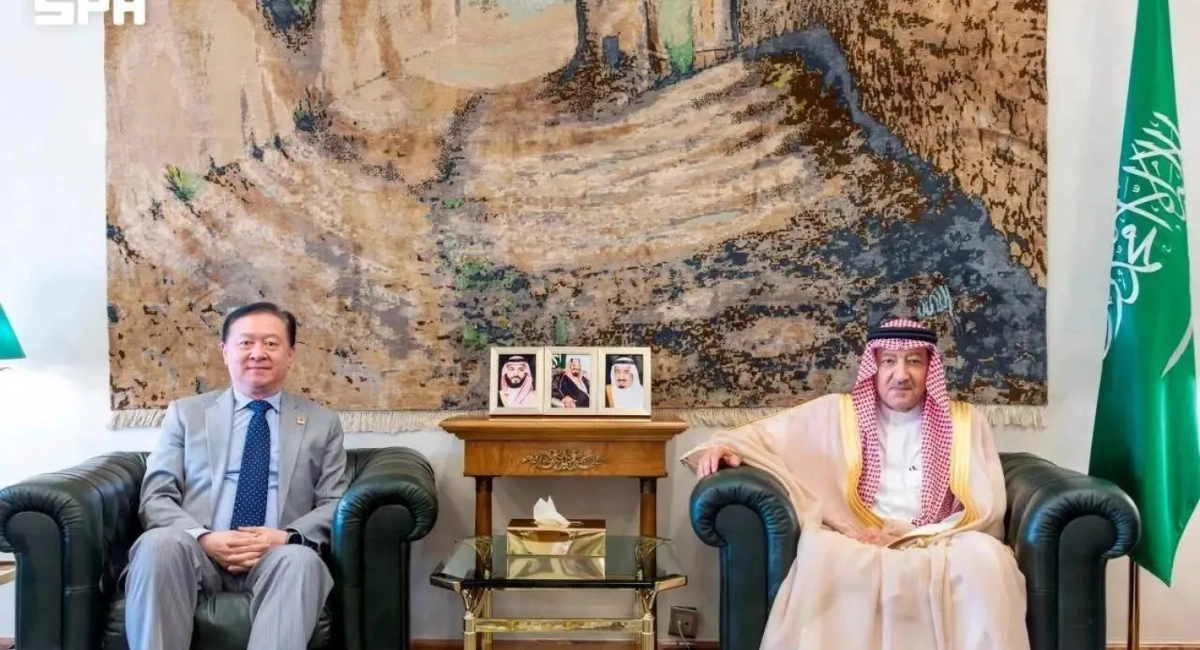
The foreign minister of Saudi Arabia has received a written message from his Chinese counterpart, underscoring continued diplomatic engagement between Saudi Arabia and China. The communication comes amid a period of expanding political, economic, and strategic cooperation between the two countries, which have strengthened ties in recent years through high-level visits, energy partnerships, and multilateral coordination. While the contents of the message have not been fully disclosed, the development highlights ongoing efforts to deepen bilateral relations and reinforce diplomatic dialogue on regional and global issues.
Why Is This Diplomatic Exchange Between Saudi Arabia and China Significant?
The exchange of a written message between senior diplomatic officials reflects the steady growth in relations between Saudi Arabia and China, which have evolved into a comprehensive strategic partnership. Over the past decade, both countries have increased cooperation across energy, infrastructure, and investment sectors, with China remaining one of Saudi Arabia’s largest trading partners. The latest diplomatic gesture signals continuity in high-level communication channels and reinforces mutual interest in maintaining stability in their bilateral relationship.
What Do We Know About the Written Message Delivered to the Saudi Foreign Minister?
While official details of the written message remain limited, such diplomatic correspondence typically addresses areas of shared interest, including trade cooperation, regional security, and multilateral coordination. Diplomatic sources often use written messages to reaffirm commitments, propose new avenues of collaboration, or extend invitations for future meetings. In this case, the message from the Chinese foreign minister is widely interpreted as part of ongoing diplomatic engagement aimed at sustaining momentum in bilateral relations.
How Are Saudi Arabia–China Relations Evolving in Recent Years?
Relations between Saudi Arabia and China have developed rapidly, particularly in the context of global economic realignments. China has become a key importer of Saudi crude oil, while Saudi Arabia has increasingly engaged with Chinese firms in infrastructure, technology, and renewable energy projects aligned with Vision 2030. Additionally, both nations have expanded cooperation within multilateral frameworks, including the Shanghai Cooperation Organisation dialogue mechanisms and broader Global South initiatives. This evolving partnership reflects a shared interest in economic diversification and geopolitical balance.
What Role Do Energy and Trade Play in This Bilateral Relationship?
Energy remains the cornerstone of Saudi Arabia–China relations, with oil exports forming a significant portion of bilateral trade. China’s growing industrial base and energy demand have strengthened its reliance on stable Gulf energy supplies, while Saudi Arabia has benefited from long-term demand certainty. Beyond hydrocarbons, both countries have increasingly explored cooperation in petrochemicals, green hydrogen, and renewable energy technologies. Trade diversification has also become a priority, with both governments encouraging investment in logistics, manufacturing, and digital infrastructure.
How Might This Impact Regional and Global Diplomacy?
The continued exchange of high-level diplomatic messages reflects a broader shift in global diplomacy, where emerging economic powers are playing a more active role in shaping international relations. Stronger Saudi-China ties may influence discussions on energy markets, Middle East stability, and global trade routes. Analysts suggest that sustained engagement between Riyadh and Beijing could also contribute to a more multipolar global order, where strategic partnerships are not solely defined by traditional Western alliances.
What Comes Next in Saudi Arabia–China Relations?
Looking ahead, further diplomatic exchanges, high-level visits, and economic agreements are expected to continue shaping the trajectory of Saudi Arabia–China relations. Both sides are likely to prioritise cooperation in energy transition technologies, infrastructure development, and investment diversification strategies. Continued dialogue at the ministerial level suggests that communication channels remain active and stable, paving the way for potential new agreements or joint initiatives in the coming months.
The receipt of a written message by Saudi Arabia’s foreign minister from his Chinese counterpart highlights the sustained momentum in one of the most strategically important bilateral relationships in contemporary global politics. As both nations continue to expand cooperation across energy, trade, and diplomacy, their partnership is likely to play an increasingly influential role in shaping regional stability and global economic trends. Observers will be watching closely for any follow-up meetings or agreements that may further define the next phase of Saudi Arabia–China relations.