

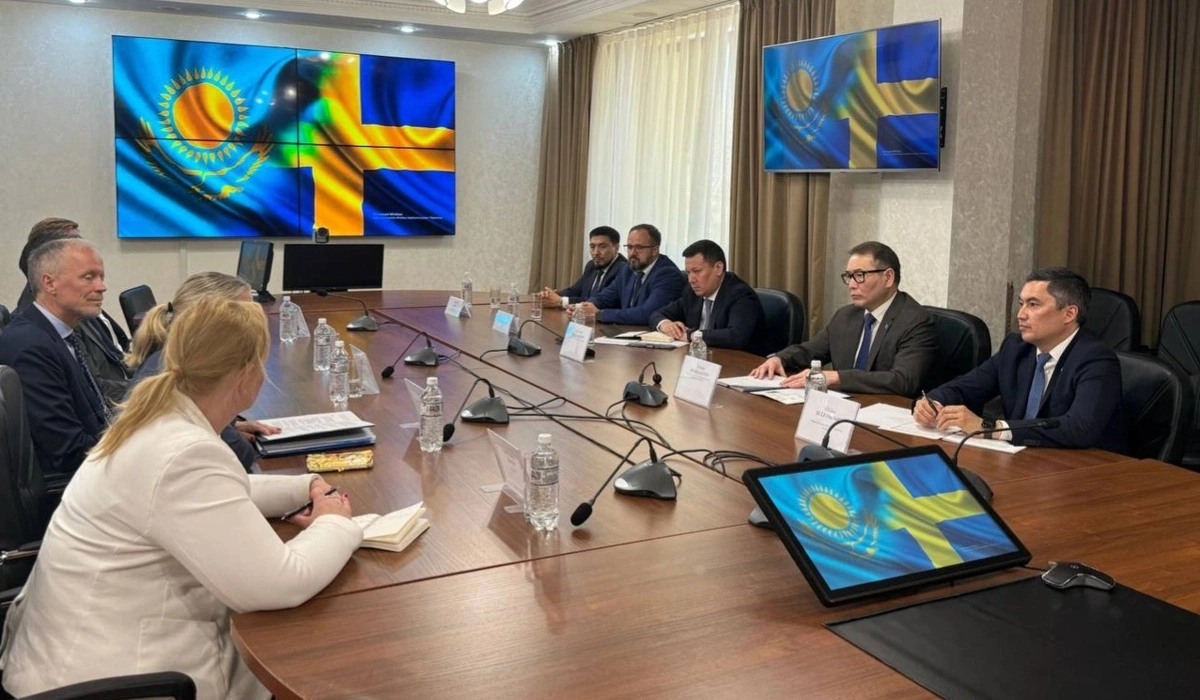
Kazakhstan has announced intentions to significantly expand its non-commodity exports to Sweden, signalling a strategic shift in its foreign trade policy aimed at reducing reliance on raw materials and strengthening value-added industries. The move is part of a broader effort by the Central Asian nation to diversify its export base, deepen economic cooperation with European markets, and attract investment into manufacturing, agriculture, and technology-driven sectors. Swedish markets are being positioned as a key destination for Kazakhstani producers seeking stable, high-value demand within the European Union.
Why Is Kazakhstan Focusing on Non-Commodity Exports to Sweden?
Kazakhstan’s renewed focus on non-commodity exports to Sweden reflects a wider national strategy to reduce dependence on hydrocarbons and raw materials, which continue to dominate its export portfolio. By targeting Sweden, a highly industrialised and innovation-driven economy, Kazakhstan aims to increase the share of manufactured goods, processed agricultural products, and light industrial outputs in its trade structure. Officials view diversification as essential for long-term economic stability, particularly as global commodity markets remain volatile.
What Does Kazakhstan Mean by Non-Commodity Exports?
Non-commodity exports from Kazakhstan typically include processed food products, machinery components, textiles, chemicals, and emerging technology-based goods. Unlike oil, gas, or raw minerals, these exports require greater domestic value addition and industrial capacity. The government has been encouraging domestic producers to move up the value chain, with the aim of increasing competitiveness in European markets such as Sweden, where demand for sustainable and traceable supply chains continues to grow.
How Strong Are Current Trade Relations Between Kazakhstan and Sweden?
Trade between Kazakhstan and Sweden remains relatively modest compared with Kazakhstan’s larger European partners, but both countries have maintained stable diplomatic and economic relations. Sweden imports a wide range of goods from global markets and is known for its openness to diversified supply chains. Kazakhstan, meanwhile, has been seeking to strengthen its presence within the European Union’s broader economic ecosystem through bilateral agreements and trade facilitation measures.
What Opportunities Does the Swedish Market Offer Kazakhstan?
The Swedish market presents opportunities for Kazakhstan due to its strong demand for high-quality industrial inputs, green technologies, and sustainable consumer goods. Sweden’s emphasis on environmental standards and innovation aligns with Kazakhstan’s ongoing reforms in industrial modernisation and green transition initiatives. Analysts suggest that Kazakh exporters who meet EU regulatory standards could benefit from access to one of the most advanced and stable consumer economies in Northern Europe.
What Challenges Could Kazakhstan Face in Expanding Exports?
Despite the strategic ambition, Kazakhstan may face structural challenges in expanding non-commodity exports to Sweden. These include logistical constraints, compliance with strict EU regulatory frameworks, and the need for improved production standards in certain industrial sectors. Transport routes, customs procedures, and certification requirements could also present barriers for smaller Kazakh exporters attempting to enter the Swedish market for the first time.
What Role Does Economic Diversification Play in Kazakhstan’s Strategy?
Economic diversification is a central pillar of Kazakhstan’s long-term development strategy, particularly as the country seeks to reduce vulnerability to global energy price fluctuations. By expanding non-commodity exports to Sweden and other European partners, Kazakhstan aims to build a more resilient economy driven by manufacturing, innovation, and services. This approach is also closely linked to broader reforms intended to improve the country’s investment climate and industrial competitiveness.
What Happens Next in Kazakhstan’s Trade Plans With Sweden?
In the coming period, Kazakhstan is expected to explore new trade facilitation measures, strengthen export support mechanisms, and encourage partnerships between Kazakh and Swedish businesses. This may include participation in trade fairs, bilateral economic forums, and investment promotion initiatives designed to connect producers with European buyers. Government agencies are also likely to focus on improving export readiness among domestic firms to meet Swedish and EU standards.
Kazakhstan’s ambition to boost non-commodity exports to Sweden marks an important step in its broader economic transformation agenda. If successful, the strategy could help reduce the country’s reliance on raw material exports while strengthening its integration into high-value European markets. However, the pace of progress will depend on Kazakhstan’s ability to overcome regulatory, logistical, and production challenges. As global demand shifts towards diversified and sustainable supply chains, the development of Kazakhstan–Sweden trade relations will remain a key indicator of the country’s evolving economic direction.