

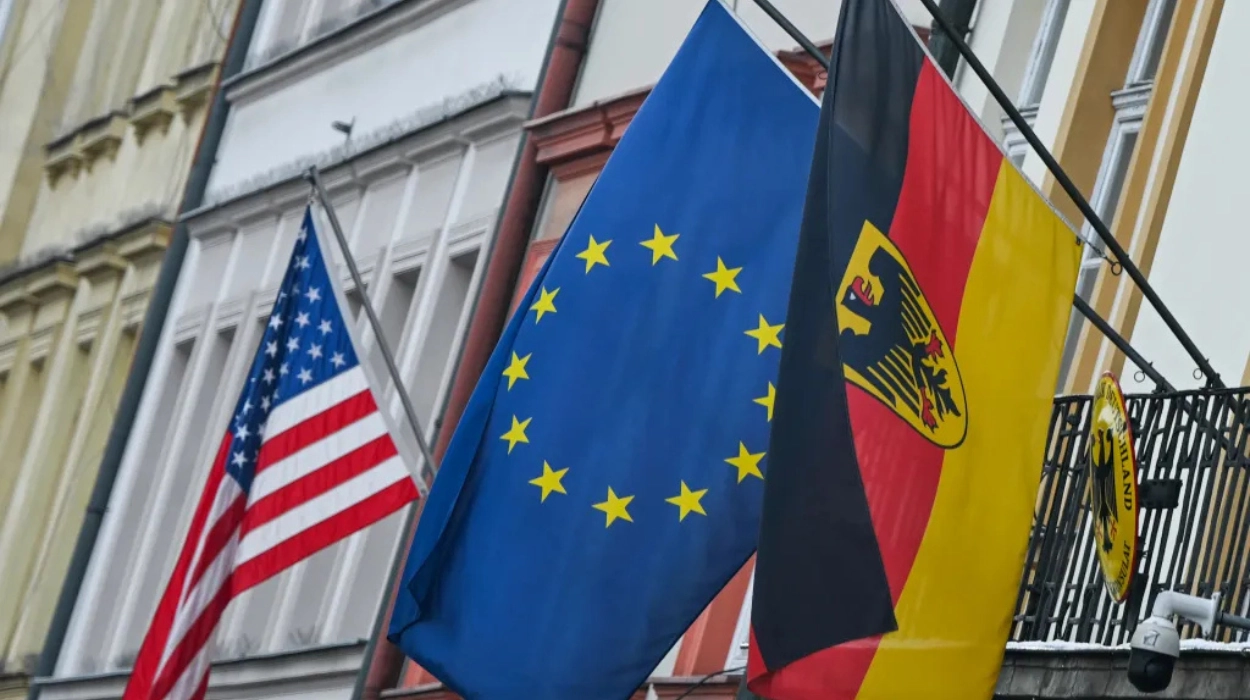
A growing number of Europeans are reassessing their perception of the United States as a dependable ally, as political uncertainty, shifting foreign policy priorities, and diverging strategic interests strain transatlantic relations. Once considered the cornerstone of Western security cooperation, the US-Europe alliance is increasingly viewed through a more cautious lens, particularly amid debates over NATO burden-sharing, global conflicts, and economic competition. While formal diplomatic ties remain intact, public sentiment and elite discourse across parts of Europe suggest a gradual but notable recalibration of trust in Washington’s long-term reliability.
Why Is European Trust in the United States Being Reassessed?
European trust in the United States has been shaped by a series of geopolitical and political shocks over the past two decades. The Iraq War remains a defining moment, widely seen across Europe as a unilateral decision that undermined multilateral diplomacy. More recently, fluctuations in US foreign policy direction—particularly between successive administrations—have reinforced perceptions of unpredictability.
Concerns have also grown around the durability of American commitments to NATO, especially during periods when US leadership has openly questioned European defence spending levels. Although the United States continues to play a central role in European security, the perception of conditional engagement has taken root in parts of European policymaking circles.
What Role Has NATO and Defence Spending Played in Straining Relations?
NATO remains the backbone of transatlantic defence cooperation, yet disagreements over burden-sharing have long created friction. Successive US administrations have urged European allies to meet or exceed the NATO guideline of spending 2% of GDP on defence.
While some European states have increased military budgets following Russia’s invasion of Ukraine in 2022, the expectation gap has not fully closed. This has fuelled debates within Europe about whether reliance on US military power is sustainable in the long term. As a result, initiatives aimed at “strategic autonomy” within the European Union have gained renewed momentum.
How Have Recent US Political Changes Influenced European Perceptions?
Political volatility in the United States has played a significant role in shaping European perceptions. Shifts in policy between administrations have affected areas ranging from climate commitments to trade agreements and international security priorities.
European policymakers have increasingly expressed concern that long-term agreements with Washington may be vulnerable to domestic political cycles. This uncertainty has encouraged calls within the EU for more resilient, independent frameworks for foreign policy and defence cooperation.
Why Are Trade and Technology Disputes Becoming More Significant?
Beyond security, economic competition has added another layer of tension. Disputes over industrial subsidies, digital regulation, and technology governance have exposed differences in approach between the US and Europe.
European leaders have raised concerns about the scale of American industrial policy measures, while the US has criticised certain EU regulatory frameworks affecting major technology firms. These disagreements, while managed through diplomatic channels, have contributed to a broader sense that the two sides are increasingly competing as much as cooperating in key sectors.
How Has Public Opinion Across Europe Shifted Over Time?
Public opinion trends in several European countries indicate a gradual cooling of enthusiasm towards the United States as a consistent partner. While the US is still generally viewed positively compared with other global powers, confidence in its political stability and foreign policy reliability has fluctuated.
Factors such as the 2003 Iraq War, surveillance disclosures in the 2010s, and differing responses to global conflicts have all influenced perceptions. Younger generations in particular appear more open to the idea of Europe developing independent strategic capabilities rather than relying predominantly on US leadership.
What Impact Do Global Conflicts Have on Transatlantic Relations?
Recent global conflicts, including the war in Ukraine and tensions in the Middle East, have highlighted both the strengths and limitations of the US-Europe alliance. In Ukraine, the United States has provided critical military and financial support, reinforcing its role as a key security partner.
However, differences in approach and emphasis between Washington and European capitals have occasionally surfaced, particularly regarding long-term strategy and diplomatic engagement. These divergences have reinforced the idea that shared interests do not always translate into fully aligned policy responses.
What Are European Leaders Saying About Strategic Autonomy?
European leaders and policymakers increasingly refer to the concept of “strategic autonomy” as a guiding principle for the future of EU foreign and security policy. This does not imply a break from the United States, but rather a desire to reduce overdependence on external powers.
Supporters argue that Europe must develop stronger defence capabilities, supply chain resilience, and independent diplomatic influence to navigate a more fragmented global order. Critics, however, warn that such ambitions could risk duplication of NATO structures or weaken transatlantic unity if not carefully managed.
What Happens Next in US–Europe Relations?
Looking ahead, the US–Europe relationship is likely to remain a cornerstone of global stability, but one that is increasingly defined by pragmatic cooperation rather than automatic alignment. Elections in the United States, evolving security threats, and economic competition will all shape the trajectory of the partnership.
While neither side is expected to abandon the alliance, the era of unquestioned transatlantic consensus appears to be fading. Instead, a more transactional and strategically cautious relationship is emerging, reflecting broader shifts in global power dynamics.
As both Europe and the United States navigate an increasingly complex international landscape, the durability of their partnership will depend on their ability to reconcile shared security interests with diverging political and economic priorities.