

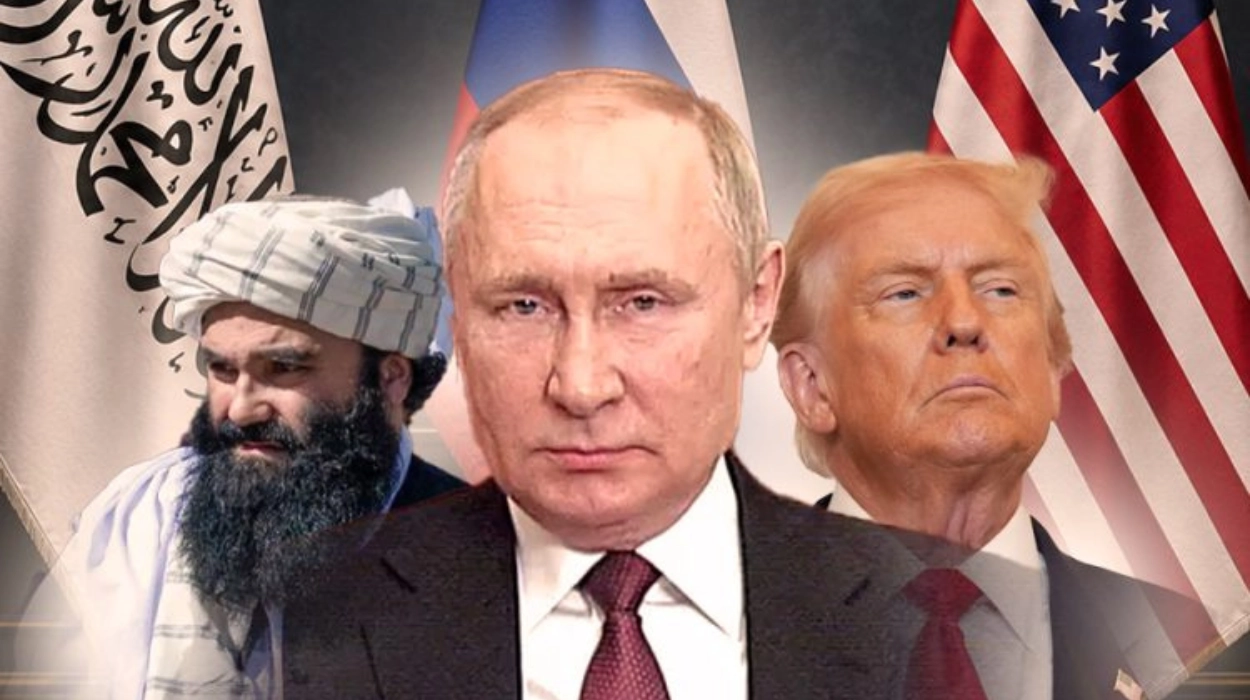
The evolving relationship between Russia and the Taliban has become a defining feature of post-2021 geopolitics in Afghanistan, as the withdrawal of US and NATO forces reshaped regional power dynamics. Security cooperation, economic engagement, and diplomatic contact between Moscow and the Taliban-led administration in Kabul have expanded in recent years, raising questions over how this alignment could influence wider regional stability and future relations with the United States. Analysts say the developing partnership reflects shifting strategic calculations across Central Asia and beyond.
Why Are Taliban-Russia relations Gaining International Attention?
Taliban-Russia relations have drawn growing international scrutiny due to their expansion since the US military withdrawal from Afghanistan in 2021. According to regional analysis, Moscow has hosted multiple engagements involving Taliban representatives in recent years, signalling a pragmatic shift from its earlier opposition to the group during the 1990s.
This development is seen as part of a broader recalibration in Eurasian security politics, where regional powers are adjusting to the absence of Western military presence in Afghanistan. The relationship is not formally defined as a strategic alliance, but increased political dialogue and security coordination suggest a steady deepening of ties.
How Has the Russia-Taliban Relationship Evolved Over Time?
The trajectory of Taliban-Russia relations has shifted significantly over three decades. During the 1990s, Russia backed the Northern Alliance and opposed Taliban rule. However, in the years leading up to 2021, Moscow began cautiously engaging the group through diplomatic channels and regional forums.
Following the US withdrawal, Russia’s approach has increasingly focused on stabilising Afghanistan’s borders with Central Asia. Security concerns, particularly relating to cross-border instability, have encouraged Moscow to treat the Taliban as a governing reality rather than an isolated militant movement. This pragmatic shift has opened pathways for dialogue on border security and counterterrorism cooperation.
What Security Interests Drive Russia’s Engagement With the Taliban?
Russia’s engagement with the Taliban is largely driven by security considerations in Central Asia. Analysts note that instability in Afghanistan has the potential to spill over into neighbouring states such as Tajikistan, Uzbekistan, and Turkmenistan, which are considered strategically important to Moscow.
A key concern is the presence of Islamic State Khorasan Province (ISKP), which Russia views as a direct security threat to regional stability. Cooperation with the Taliban is therefore seen as a mechanism to contain extremist networks and reduce cross-border risks. Additionally, Moscow aims to strengthen its geopolitical influence in a region where Western military presence has significantly diminished.
What Role Do Economic Projects Play in Taliban-Russia relations?
Economic cooperation is emerging as another pillar of Taliban-Russia relations, alongside security coordination. Regional infrastructure initiatives, including the Turkmenistan-Afghanistan-Pakistan-India (TAPI) gas pipeline and proposed trans-Afghan railway projects, have been referenced in discussions involving Afghanistan’s neighbours and international stakeholders.
While these projects remain at various stages of development, they are widely viewed as key to Afghanistan’s economic reintegration. Russia’s interest in supporting regional connectivity reflects its broader strategy of strengthening trade corridors linking Central and South Asia. At the same time, Afghanistan’s leadership has sought to attract investment to reduce its international isolation and stimulate economic recovery.
How Could Taliban-U.S. relations Be Affected by Russia’s Influence?
The expansion of Taliban-Russia relations is likely to complicate the already fragile relationship between Kabul and Washington. US policymakers continue to prioritise counterterrorism concerns, humanitarian access, and regional stability, which leaves room for limited engagement despite political tensions.
However, analysts suggest that closer ties between Moscow and the Taliban could heighten mistrust between Washington and Kabul. The Taliban may also leverage relationships with Russia, China, and other regional actors to strengthen their negotiating position with the United States. This balancing strategy reflects broader efforts by the Taliban to diversify diplomatic partnerships and reduce reliance on any single power bloc.
What Are Regional Powers Saying About the Situation?
Regional responses to Taliban-Russia relations have been mixed but largely pragmatic. Central Asian states have shown willingness to engage with the Taliban to prevent instability from spreading across borders. China has similarly emphasised the importance of stability and counter-extremism cooperation in the region.
Iran and Pakistan continue to monitor developments closely, given their own security and political interests in Afghanistan. While concerns remain about militant activity and border security, regional actors appear increasingly focused on managed engagement rather than isolation.
What Happens Next in Taliban-Russia relations?
The future of Taliban-Russia relations will likely depend on evolving security conditions in Afghanistan and the broader regional balance of power. Continued cooperation could strengthen Russia’s influence in Central Asia while providing the Taliban with greater political and economic legitimacy.
However, experts caution that the relationship remains complex and sensitive, particularly given competing interests involving the United States, China, and neighbouring states. Any escalation in militant activity or regional instability could quickly reshape current dynamics.
Taliban-Russia relations are expected to remain a significant factor in shaping Afghanistan’s post-withdrawal geopolitical landscape. While cooperation between Moscow and the Taliban is driven primarily by security and strategic interests, its broader implications extend across regional power competition and global diplomacy. As Afghanistan continues to serve as a focal point for overlapping international interests, the trajectory of this relationship will remain closely watch