

Colombia has recognised Israeli sovereignty over the Golan Heights, becoming only the second country after the United States to take that position. The decision, announced on Monday, comes as Bogotá’s new government moves to rebuild closer relations with Israel and follows a significant shift in Colombia’s foreign policy after the election of President Abelardo de la Espriella. Colombian officials have cited the strategic importance of the territory and Israel’s security interests, while the move challenges the longstanding international position that the Golan Heights remain Syrian territory under Israeli occupation.
Why has Colombia recognised Israeli sovereignty over the Golan Heights?
Colombia’s new government said the decision was driven by the strategic importance of the Golan Heights and Israel’s security requirements amid continuing instability in the Middle East. Bogotá described Israeli control of the territory as an important component of Israel’s national defence and its ability to protect its population from external threats.
The decision represents a sharp departure from the approach taken by former Colombian president Gustavo Petro. His government suspended diplomatic relations with Israel in 2024 amid strong criticism of Israel’s military campaign in Gaza. The incoming administration has instead signalled that it intends to restore close diplomatic, commercial and security ties with Israel.
Recent diplomatic developments had already indicated the change. Colombia’s incoming government agreed in July to restore diplomatic relations with Israel, exchange ambassadors, remove visa requirements and move Colombia’s embassy from Tel Aviv to Jerusalem.
The Golan announcement therefore forms part of a broader foreign-policy realignment rather than appearing as an isolated decision.
What is the significance of the Golan Heights?
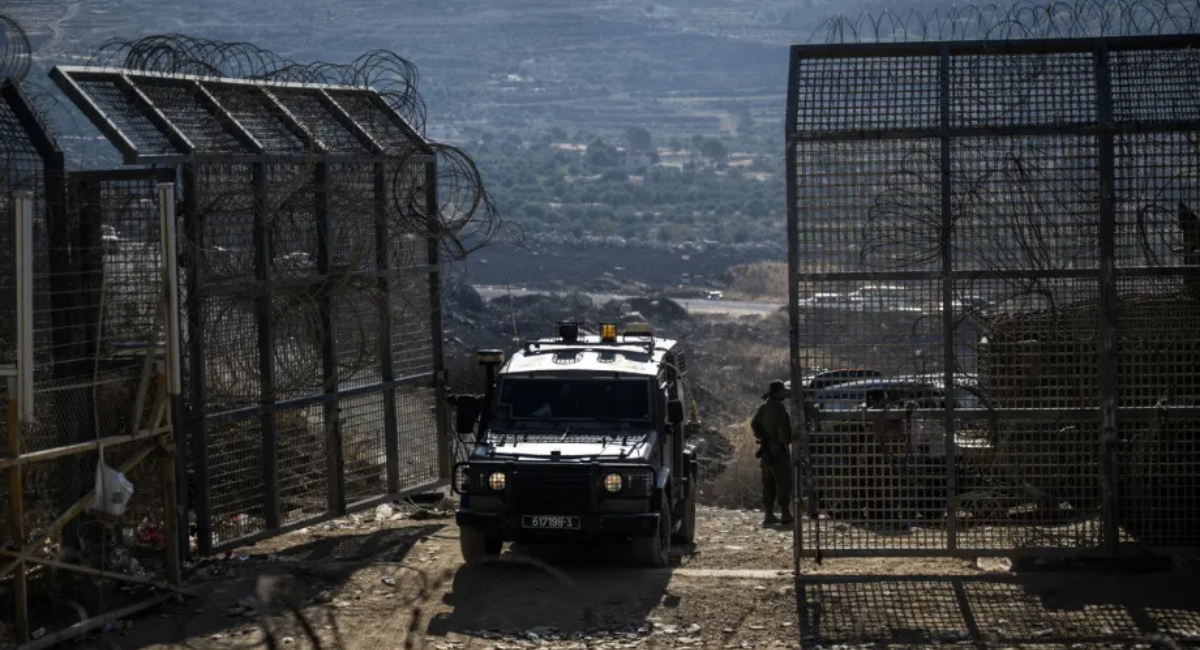
The Golan Heights is a strategically important plateau on the border between Israel and Syria. Israel captured most of the territory from Syria during the 1967 Six-Day War and formally extended Israeli law and administration to the area in 1981.
The international community has generally rejected that move as an annexation and continues to regard the Golan as Syrian territory occupied by Israel. The United Nations Security Council adopted Resolution 497 in 1981, declaring Israel’s decision to impose its laws and administration on the Golan “null and void” under international law.
The territory is strategically valuable because of its elevated position overlooking northern Israel and parts of Syria. It is also important for water resources and agriculture. The Golan has remained one of the central unresolved territorial disputes between Israel and Syria for decades.
The region’s importance has increased further since the collapse of Bashar al-Assad’s government in Syria in December 2024. Israel has argued that instability across the border creates additional security risks, while critics have warned that expanded Israeli military activity could further undermine regional stability.
How does Colombia’s decision compare with the international position?
Colombia’s recognition places it alongside the United States, which recognised Israeli sovereignty over the Golan Heights in March 2019 under then-President Donald Trump.
Trump’s proclamation represented a major break with previous US policy. Washington argued that Israel’s security circumstances justified recognition, particularly because of threats emanating from Syria and Iran.
For years afterwards, however, the United States remained alone among UN member states in formally recognising Israeli sovereignty over the territory. Contemporary reporting in 2026 continued to describe Trump as the only foreign leader whose government had recognised the Israeli claim before Colombia’s decision.
The Colombian announcement consequently carries significance beyond the bilateral relationship between Bogotá and Jerusalem. It potentially signals that Israel may be seeking broader diplomatic acceptance of its position on the Golan, although there is currently no indication of a wider international consensus.
The European Union, for example, has maintained that it does not recognise Israeli sovereignty over the occupied Golan Heights and has based its position on international law and relevant UN Security Council resolutions.
What has Israel said about the Colombian decision?
Israeli Foreign Minister Gideon Sa’ar welcomed the Colombian government’s position, describing it as evidence of the new Colombian president’s commitment to Israel. The announcement comes as Israel seeks to strengthen relations with governments that support its security position and expand diplomatic partnerships internationally.
Israel has consistently argued that permanent control of the Golan is necessary for national security. Israeli officials have also stressed the territory’s strategic value following the collapse of the Assad government and the continuing uncertainty along the Syrian frontier.
Sa’ar has previously said that Israel is interested in expanding diplomatic normalisation in the region while maintaining what it considers essential security interests. He has also indicated that Israel would not withdraw from the Golan Heights as part of a future agreement with Syria.
Why is the decision particularly significant for Colombia?
The announcement illustrates the scale of Colombia’s foreign-policy shift following the 2026 presidential election.
President-elect Abelardo de la Espriella, a right-wing lawyer who won Colombia’s presidential run-off in June, has moved rapidly to rebuild relations with Israel. His administration has sought closer cooperation in areas including security, trade and defence technology.
That approach contrasts sharply with the previous government’s policy. Under Petro, Colombia became one of the Latin American governments most critical of Israel’s conduct in Gaza and took measures including an arms embargo and restrictions on coal exports to Israel.
Recognition of the Golan therefore carries both international and domestic political significance. It demonstrates that the new government is prepared not simply to restore diplomatic relations, but to adopt positions closely aligned with Israel and the United States on contentious Middle Eastern issues.
Could Colombia’s recognition change the status of the Golan Heights?
In practical terms, Colombia’s recognition does not alter who controls the Golan Heights. Israel has administered the territory for decades, while its sovereignty claim remains disputed internationally.
The diplomatic significance is nevertheless considerable. Recognition by another UN member state provides Israel with additional international support for a position that has long faced opposition at the United Nations.
However, one additional recognition is unlikely by itself to change the prevailing international legal position. UN Security Council resolutions concerning the Golan remain in force, while most governments continue to distinguish between Israeli control of the territory and internationally recognised sovereignty.
The issue is therefore likely to remain politically sensitive, particularly for Syria, which continues to claim the Golan Heights as its territory.
What could happen next in the Golan Heights dispute?
The immediate consequence is likely to be diplomatic rather than territorial. Colombia and Israel are expected to deepen their bilateral relationship, potentially expanding cooperation in defence, security, technology and trade.
The move could also generate criticism from Syria and governments that continue to reject Israel’s sovereignty claim. Any further recognition by other countries would be closely watched because it could indicate whether Colombia’s decision is an isolated diplomatic move or part of a broader shift.
At the same time, developments along the Israel-Syria frontier remain important. The collapse of the Assad regime has altered the security environment around the Golan, while UN peacekeepers continue to monitor the disengagement area established under the 1974 agreement. The territory’s strategic position means that changes in military control or diplomatic policy could have consequences well beyond Israel and Syria.
Colombia’s recognition of Israeli sovereignty over the Golan Heights therefore marks a notable change in international diplomatic positioning, but it does not resolve the underlying territorial dispute. The coming months will show whether Bogotá’s decision encourages other governments to reconsider their positions or instead remains an exceptional step alongside the United States. With Israel-Syria relations still unsettled and Colombia undergoing a broader foreign-policy realignment, developments in both capitals will be important to monitor.