

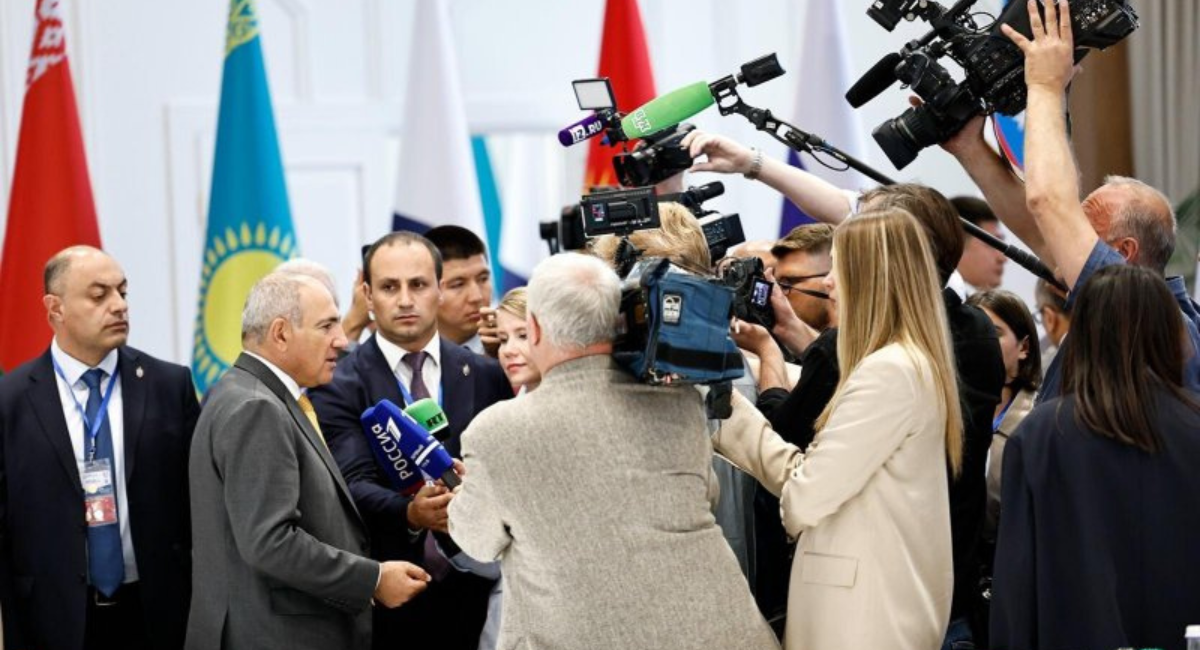
Armenian Prime Minister Nikol Pashinyan has called on members of the Eurasian Economic Union (EAEU) to respect Armenia’s efforts to broaden its international partnerships, arguing that the country’s foreign policy diversification should not be viewed as a challenge to existing alliances. His comments come as Yerevan continues to balance its long-standing economic ties with Russia and the EAEU while seeking closer engagement with the European Union, the United States and other international partners.
Pashinyan’s remarks highlight Armenia’s changing geopolitical position following years of regional tensions, including the consequences of the Nagorno-Karabakh conflict and growing debate inside the country over its security and diplomatic direction. The Armenian government has repeatedly stated that diversification is intended to strengthen national resilience rather than abandon existing economic commitments.
Why Is Armenia Seeking To Diversify Its Foreign Policy?
Armenia’s foreign policy shift has accelerated in recent years as the government reassesses its traditional security arrangements and international relationships. Historically, Russia has been Armenia’s main security partner, with Moscow playing a central role in regional affairs and maintaining a military presence at the Russian base in Gyumri.
However, relations between Yerevan and Moscow have become increasingly strained following developments surrounding Nagorno-Karabakh. Armenia criticised Russia’s response during and after Azerbaijan’s 2023 military operation in the region, while Russian officials have rejected accusations that Moscow failed to meet its obligations.
Against this background, Pashinyan’s administration has pursued a broader diplomatic approach. Armenia has expanded cooperation with Western institutions, increased dialogue with the European Union and developed new security partnerships, while remaining a member of the EAEU and maintaining economic links with Russia.
What Did Pashinyan Say About Armenia’s Relationship With The EAEU?
Pashinyan has argued that Armenia’s participation in the EAEU should not prevent the country from developing relationships with other parts of the world. He urged EAEU members to avoid interpreting Armenia’s foreign policy diversification as hostile or incompatible with its economic commitments.
The Armenian leader has previously said that his government’s approach is based on protecting national interests and creating more options for the country. He has maintained that deeper engagement with European and international partners does not automatically mean Armenia intends to withdraw from existing organisations.
The comments reflect Yerevan’s attempt to manage a complex diplomatic balance. Armenia remains economically connected to the EAEU, which includes Russia, Belarus, Kazakhstan and Kyrgyzstan, but is also seeking greater cooperation with Western economies.
How Important Is The EAEU To Armenia’s Economy?
The EAEU remains a significant economic framework for Armenia, particularly in areas such as trade, labour mobility and access to regional markets. Armenia joined the bloc in 2015, after previously negotiating closer relations with the European Union.
Trade with Russia has remained an important component of Armenia’s economy. Russia is one of Armenia’s largest trading partners, with economic cooperation covering energy, agriculture, manufacturing and investment.
At the same time, Armenia has sought to expand its economic connections beyond traditional markets. The government argues that wider international engagement can provide additional investment opportunities, technological cooperation and economic stability.
Economic analysts note that Armenia faces the challenge of maintaining beneficial trade relationships while navigating competing geopolitical interests. A sudden change in economic alignment could create significant risks, making gradual diversification a key focus for policymakers.
What Has Changed In Armenia’s Security And Diplomatic Approach?
Armenia’s security policy has undergone notable changes since the escalation of tensions with Azerbaijan. The government has questioned previous security arrangements and sought stronger cooperation with multiple international actors.
In recent years, Armenia has conducted military exercises with Western partners, including joint training activities with the United States. It has also strengthened ties with the European Union through initiatives aimed at supporting democratic reforms, economic development and institutional cooperation.
At the same time, Armenia has not formally ended its membership in the EAEU or withdrawn from other Russia-led structures. Officials in Yerevan have repeatedly emphasised that their approach is based on flexibility rather than a complete geopolitical realignment.
How Have EAEU Members Responded To Armenia’s Position?
The response from EAEU members has reflected broader concerns about Armenia’s changing foreign policy direction. Russia has repeatedly expressed concern over what it sees as Armenia moving closer to Western institutions, while Armenian officials have defended their right to make independent decisions.
Moscow and Yerevan continue to maintain diplomatic relations, although disagreements over security cooperation and regional issues have created significant political friction.
Other EAEU members have generally taken a more cautious approach, as Armenia’s position raises wider questions about how countries within Russia-led organisations manage relationships with external partners.
What Could Armenia’s Policy Shift Mean For Regional Stability?
Armenia’s foreign policy diversification could have important implications for the South Caucasus, a region influenced by competing interests from Russia, the European Union, Turkey, Iran and the United States.
Supporters of diversification argue that maintaining multiple partnerships could increase Armenia’s independence and reduce reliance on a single external power. Critics, however, warn that balancing between major geopolitical blocs could create diplomatic challenges and increase tensions with traditional allies.
The situation is also closely linked to Armenia’s efforts to secure a long-term peace agreement with Azerbaijan. International partnerships may influence negotiations, security arrangements and economic development across the region.
What Happens Next For Armenia’s Foreign Policy Strategy?
The coming months are likely to determine how Armenia manages its relationships with both the EAEU and new international partners. The government will face pressure to demonstrate that diversification can deliver practical benefits without damaging important economic connections.
Further discussions between Armenia, Russia, the European Union and other international actors are expected as Yerevan continues shaping its foreign policy direction. The outcome will depend on Armenia’s ability to balance economic interests, security concerns and diplomatic independence.
Pashinyan’s call for the EAEU not to oppose Armenia’s foreign policy diversification reflects a broader transformation in the country’s approach to global relations. As Armenia seeks a more flexible international role, its ability to maintain existing partnerships while building new ones will remain a key issue for regional observers.