

Introduction:
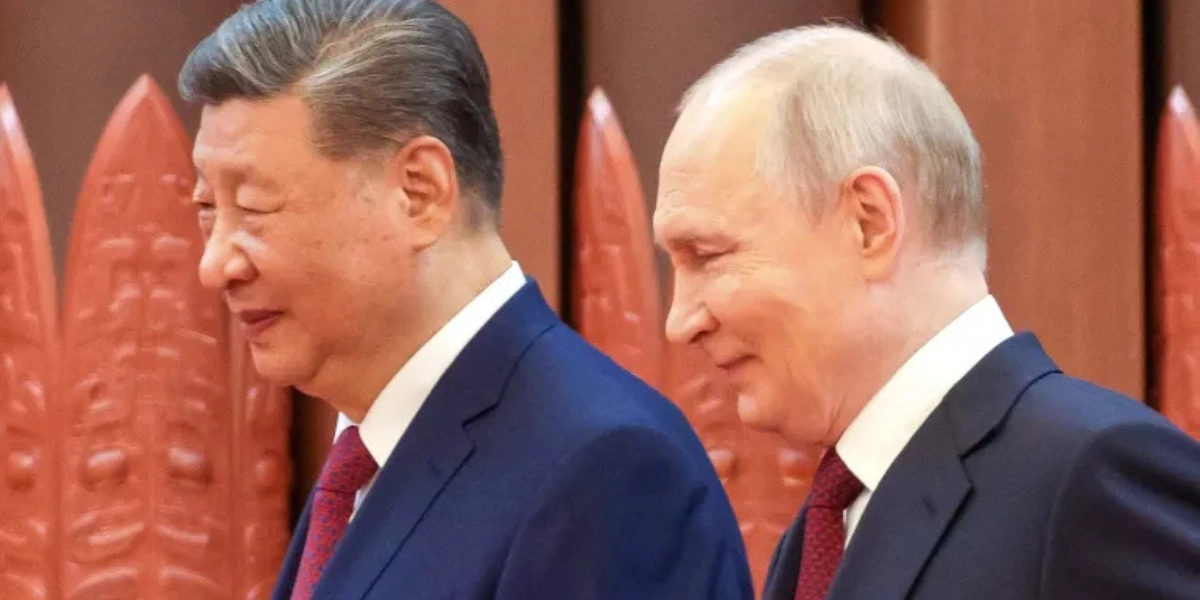
Chinese President Xi Jinping and Russian President Vladimir Putin used high-level talks in Beijing to reinforce their strategic partnership and present a united front against the United States. During Wednesday’s summit, the two leaders criticised Washington’s defence policies, warned against what they described as a return to the “law of the jungle” in global affairs, and pledged deeper political and economic cooperation amid mounting geopolitical tensions. The meeting comes at a time of growing instability linked to the wars in Ukraine and the Middle East, as well as intensifying competition between major world powers.
Why Did Xi and Putin Emphasise Unity Against the United States?
The summit in Beijing highlighted the increasingly close relationship between China and Russia as both countries seek to counterbalance US influence on the global stage. In a joint statement issued after the talks, Moscow and Beijing criticised American military strategy, including US President Donald Trump’s proposed $175 billion “Golden Dome” missile defence project.
The initiative, which reportedly includes plans for a new missile field in the American Midwest, was described by the two countries as destabilising to international security. The joint statement also referenced the collapse of the last remaining US-Russia arms control treaty, which expired earlier this year after Washington did not respond to Moscow’s proposal for a one-year extension.
Both leaders framed their cooperation as a response to what they see as growing unilateralism in international politics. The statement argued that attempts by certain countries to dominate global affairs and restrict the sovereign development of other nations had failed.
What Messages Did the Leaders Deliver During the Summit?
Putin and Xi both used strong language to underline the resilience of their partnership. Putin praised the momentum of economic cooperation between the two nations despite what he called “unfavourable external factors”. Xi, meanwhile, described the China-Russia relationship as “unyielding” and strengthened by political trust and strategic coordination.
The Russian leader also stated that Moscow and Beijing would pursue an “independent and sovereign” foreign policy together. Xi echoed those comments, saying the world was becoming “increasingly chaotic” and warning against the dominance of hegemonic powers.
The carefully staged ceremony in Beijing, complete with military honours and national anthems, reinforced the symbolic importance of the visit. Putin’s trip marks 25 years of the Sino-Russian friendship treaty and reflects the increasingly regular contact between the two leaders, who have now met more than 40 times.
How Does The Ukraine War Continue To Shape China-Russia Relations?
Russia’s invasion of Ukraine remains central to the evolving partnership between Beijing and Moscow. Since Western nations imposed sweeping sanctions on Russia and reduced economic ties following the full-scale invasion in 2022, China has emerged as one of Moscow’s most important economic partners.
China has significantly increased imports of Russian oil and energy products, helping to offset the impact of Western restrictions. Energy cooperation has become a key pillar of the relationship, with Putin describing the sector as the “driving force” of bilateral economic ties.
However, despite years of negotiations, the summit did not produce a final agreement on the proposed Power of Siberia 2 gas pipeline. Kremlin spokesperson Dmitry Peskov said the two sides had reached a “basic understanding” regarding the project’s route but acknowledged there was still no clear timeline for construction.
Analysts say the pipeline remains strategically important for Russia, particularly as European demand for Russian gas has sharply declined since the Ukraine war began.
What Position Did China Take On The Middle East Conflict?
The conflict involving Iran also featured prominently during the talks. Xi told Putin that further escalation in the region would be dangerous and called for an immediate ceasefire alongside continued diplomatic negotiations.
The comments reflect China’s growing efforts to present itself as a global diplomatic actor capable of engaging with multiple sides in major international crises. Beijing has increasingly positioned itself as an advocate for multipolarity and negotiated settlements, particularly in regions where US influence has traditionally been dominant.
The joint statement issued by China and Russia warned that international fragmentation risked pushing the world back towards instability and geopolitical confrontation.
Why Does This Summit Matter For Global Politics?
The Beijing summit demonstrates the depth of strategic coordination between China and Russia at a time of shifting global alliances. While both countries insist their cooperation is not directed against any particular state, the language used during the meeting clearly reflected shared opposition to US foreign and defence policy.
The talks also underline the growing importance of China-Russia economic cooperation in energy, trade and technology. Putin arrived in Beijing accompanied by a large delegation of government officials and business leaders, signalling Moscow’s continued reliance on China as a crucial economic partner.
For Beijing, maintaining close ties with Russia provides both strategic leverage and access to vital energy resources. At the same time, China continues to balance its relationship with Western economies, particularly amid ongoing tensions with Washington over trade, security and influence in Asia.
What Could Happen Next After The Beijing Talks?
The summit is likely to deepen concerns in Western capitals about the strengthening partnership between China and Russia. Although no major breakthrough agreements were announced, the political symbolism of the meeting was significant, particularly following recent diplomatic engagement between Beijing and Washington.
Observers will now closely monitor whether the two countries accelerate cooperation in defence, energy and international diplomacy. Much attention will also focus on whether negotiations over the Power of Siberia 2 pipeline can eventually be finalised.
The broader implications extend beyond bilateral relations. As geopolitical rivalries intensify and conflicts continue in Ukraine and the Middle East, the alignment between Beijing and Moscow may play an increasingly influential role in shaping the future global order. For governments, businesses and international institutions alike, the evolving China-Russia partnership remains a critical development to watch in the months ahead.