

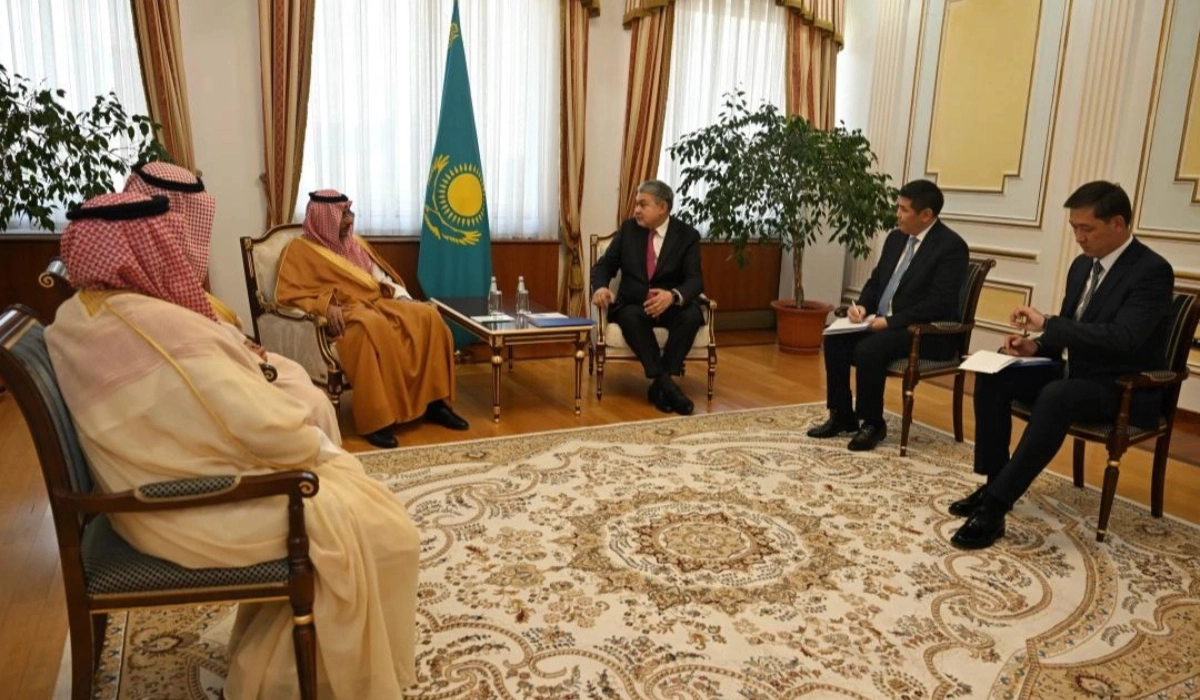
Kazakhstan and Saudi Arabia have taken further steps to deepen their economic relationship following high-level discussions in Astana focused on industrial cooperation, mining, metallurgy, critical minerals and infrastructure development. The talks, held on Thursday, brought together senior officials from both countries who reaffirmed their commitment to expanding trade, investment and joint project opportunities across key strategic sectors. The meeting also highlighted growing interest in water security collaboration, alongside broader efforts to strengthen long-term bilateral partnership frameworks.
Why Is Kazakhstan–Saudi Arabia Industrial Cooperation Expanding Now?
Kazakhstan–Saudi Arabia industrial cooperation is gaining momentum as both nations seek to diversify their economies and strengthen strategic partnerships beyond traditional energy trade. Kazakhstan is actively developing its mining and metallurgical sectors, while Saudi Arabia is pursuing its Vision 2030 agenda, which prioritises economic diversification and investment in global resource supply chains.
The discussions in Astana reflect a shared interest in expanding cooperation in critical minerals, which are increasingly essential for global energy transition technologies, including batteries, electric vehicles and advanced manufacturing. Both sides see industrial collaboration as a way to unlock long-term investment opportunities and improve supply chain resilience.
What Was Discussed During the Astana Meetings?
During the talks, officials focused on a wide range of trade, economic and investment issues under the umbrella of Kazakhstan–Saudi Arabia industrial cooperation. Particular attention was given to mining, metallurgy and infrastructure projects, alongside the development of critical mineral resources.
Kazakh officials emphasised the importance of agreements signed earlier in the year, including the establishment of a Kazakhstan–Saudi Coordination Council and a framework for the promotion and reciprocal protection of investments. These agreements are intended to provide a more structured environment for long-term cooperation and investor confidence.
Water security was also raised as an emerging area of shared concern, with both sides exploring potential international cooperation mechanisms to address resource management challenges.
What Did Officials Say About Bilateral Investment Opportunities?
Kazakh Minister Kosherbayev underscored that Kazakhstan attaches high priority to strengthening its strategic partnership with Saudi Arabia. He highlighted the significance of formal agreements already in place, which aim to support greater investor protection and coordination between the two governments.
Saudi Minister Al-Khorayef expressed strong interest in expanding practical cooperation across all sectors discussed. He signalled openness to deeper engagement in Kazakhstan’s industrial and resource-based economy, particularly in mining and critical minerals development.
Both sides agreed that Kazakhstan–Saudi Arabia industrial cooperation has strong potential for further expansion through joint ventures, private-sector participation and large-scale infrastructure investment.
How Could This Impact Mining, Metals and Critical Minerals?
The focus on mining and critical minerals could have significant implications for Kazakhstan’s resource sector and Saudi Arabia’s global investment strategy. Kazakhstan holds substantial reserves of minerals used in industrial production and clean energy technologies, making it an increasingly attractive destination for foreign investment.
Saudi Arabia, meanwhile, is seeking to secure long-term access to strategic materials as part of its broader industrial transformation. Enhanced cooperation may result in new exploration projects, joint extraction ventures and technology-sharing agreements in metallurgy and mineral processing.
If successfully implemented, Kazakhstan–Saudi Arabia industrial cooperation could strengthen supply chain integration between Central Asia and the Gulf region, particularly in resource-intensive industries.
What Role Does Infrastructure and Water Security Play in the Partnership?
Beyond mining and investment, infrastructure development and water security were key topics in the discussions. Kazakhstan faces ongoing challenges linked to water resource management, particularly in agriculture and industrial planning. Saudi Arabia, which has extensive experience in water infrastructure and desalination technologies, may offer expertise and investment in this area.
The inclusion of water security in the bilateral agenda signals a broader approach to Kazakhstan–Saudi Arabia industrial cooperation, extending beyond extractive industries to include sustainability and long-term resource management.
What Happens Next in Kazakhstan–Saudi Arabia Relations?
Following the Astana talks, both countries reaffirmed their commitment to strengthening mutually beneficial cooperation. Future steps are expected to include further engagement through the Coordination Council, expanded investment discussions and potential announcements of joint industrial projects.
The trajectory of Kazakhstan–Saudi Arabia industrial cooperation suggests a deepening strategic relationship, particularly in sectors aligned with global economic transitions such as critical minerals and sustainable infrastructure.
As both nations continue to pursue economic diversification and international investment partnerships, observers will be closely watching how quickly discussions translate into concrete projects. The outcome could shape not only bilateral relations but also broader regional dynamics in trade, energy transition supply chains and industrial development.