

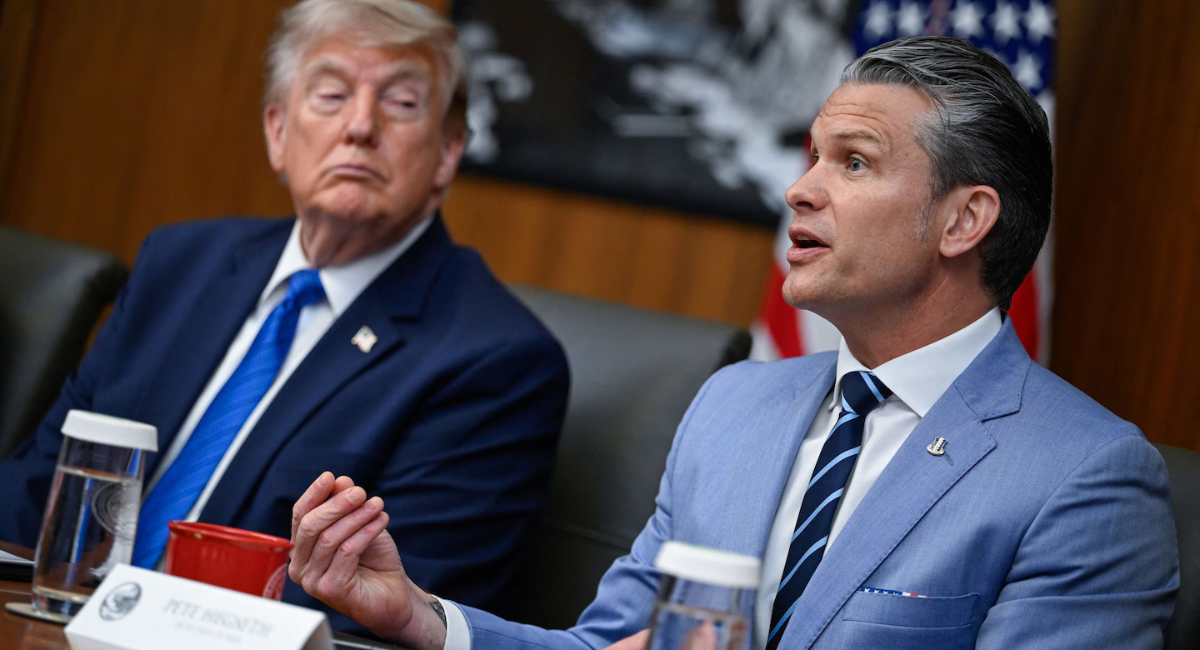
A reported disagreement between US President Donald Trump and Defence Secretary Pete Hegseth at Camp David has drawn renewed attention to the United States’ military preparedness during heightened tensions with Iran. According to reports, the two senior officials differed over concerns that US missile stockpiles could be significantly depleted during a prolonged military confrontation, raising broader questions about defence planning, strategic deterrence and the country’s ability to sustain operations if regional hostilities intensify.
Why Is the Reported Camp David Meeting Receiving So Much Attention?
The reported exchange between Donald Trump and Pete Hegseth has become a major talking point because it highlights the strategic challenges facing the United States as tensions in the Middle East remain elevated. Camp David has historically been used for high-level national security discussions, making any reported disagreement among senior officials particularly significant.
The reported debate centred on whether existing US missile inventories would be sufficient if military operations against Iran expanded beyond a limited campaign. Modern conflicts rely heavily on precision-guided munitions, air defence interceptors and long-range strike weapons, all of which require substantial industrial capacity to replenish.
Although disagreements within national security teams are not unusual, reports of differences over military readiness often attract close scrutiny because they may influence defence policy and future procurement decisions.
What Were the Reported Missile Depletion Concerns?
According to reports, concerns focused on the possibility that a sustained military campaign against Iran could consume large quantities of advanced missiles faster than manufacturers could replace them.
Modern conflicts have demonstrated how quickly sophisticated weapons inventories can be exhausted. Precision-guided missiles, cruise missiles and air defence interceptors have all been used extensively in recent conflicts across Europe and the Middle East, placing increased pressure on defence production.
Military planners generally prepare for multiple operational scenarios, including prolonged campaigns that require continuous resupply. The reported discussion reflects wider concerns across Western defence establishments about balancing immediate operational requirements with maintaining strategic reserves.
Why Are Missile Stockpiles Increasingly Important?
Missile inventories have become a central issue in defence planning because precision weapons now play a critical role in modern warfare. Long-range missiles provide governments with the ability to strike strategic targets while limiting risks to personnel.
However, these weapons are expensive, technologically complex and often require months or even years to manufacture. Supply chains involving specialist components, advanced electronics and propulsion systems can further slow production.
Several Western governments have already announced investments aimed at increasing defence manufacturing capacity following increased demand for military equipment in recent years.
How Does Iran Factor Into the Strategic Debate?
Iran possesses one of the Middle East’s largest ballistic missile arsenals and has invested heavily in developing drones, cruise missiles and regional proxy capabilities over many years.
Western intelligence agencies and defence analysts have frequently assessed that Iran’s missile programme represents one of its primary conventional military strengths. Its ability to launch large-scale missile attacks has become a central consideration in regional security planning.
Any potential military confrontation would likely involve efforts to intercept incoming missiles while simultaneously targeting launch sites and military infrastructure. Such operations could rapidly increase demand for interceptor missiles and precision-guided weapons.
What Have Defence Experts Said About Military Readiness?
Defence analysts have long argued that modern military readiness depends not only on the size of armed forces but also on industrial production capacity.
Many experts note that Western defence industries were originally structured to support peacetime procurement rather than sustained high-intensity conflict. Recent geopolitical developments have prompted governments to reassess production capabilities and strengthen domestic manufacturing.
Security specialists also argue that maintaining sufficient stockpiles acts as a deterrent by demonstrating that military operations could be sustained if necessary.
How Have Recent Conflicts Influenced These Concerns?
Recent conflicts have illustrated the speed at which advanced munitions can be consumed during intensive military operations.
The war in Ukraine significantly increased demand for air defence systems, artillery ammunition and long-range missiles among NATO members and their allies. Meanwhile, instability across the Middle East has required additional deployments of missile defence systems to protect military installations and regional partners.
These developments have encouraged many governments to review procurement strategies, expand defence budgets and accelerate weapons production.
Could the Reported Disagreement Affect US Defence Policy?
While internal policy discussions are common within any administration, reported differences between senior officials can shape future defence priorities.
If concerns over missile inventories continue, policymakers may seek additional funding to expand production lines, replenish existing stockpiles and modernise weapons manufacturing infrastructure.
Congress has already considered measures designed to strengthen the American defence industrial base, with bipartisan support emerging for increased investment in missile production and supply chain resilience.
What Does This Mean for US Allies and Regional Security?
The United States remains the principal security partner for many countries across Europe, the Middle East and the Indo-Pacific. Consequently, the availability of advanced missile systems has implications well beyond American military planning.
Allied governments often coordinate procurement programmes with the United States and depend on compatible weapons systems for joint operations. Any concerns about production capacity or inventory levels could therefore influence defence planning among NATO members and regional partners.
At the same time, defence cooperation has increasingly focused on expanding manufacturing partnerships to improve resilience during future crises.
What Happens Next in the Situation?
Officials are expected to continue reviewing military readiness as regional security challenges evolve. Defence planners will likely assess existing missile inventories alongside projected operational requirements, while policymakers consider further investment in production capacity.
Although the reported disagreement between Donald Trump and Pete Hegseth has highlighted differing perspectives on military preparedness, it also underscores a broader strategic issue confronting many Western nations: ensuring that defence industries can support prolonged operations if geopolitical tensions escalate.
The coming months are likely to bring continued debate over defence spending, industrial expansion and strategic deterrence. As developments surrounding Iran and regional security continue to unfold, military readiness and missile stockpiles will remain central to discussions about national defence, alliance commitments and long-term geopolitical stability. For readers and policymakers alike, this is a story that warrants close attention given its potential implications for international security and future defence strategy.8