


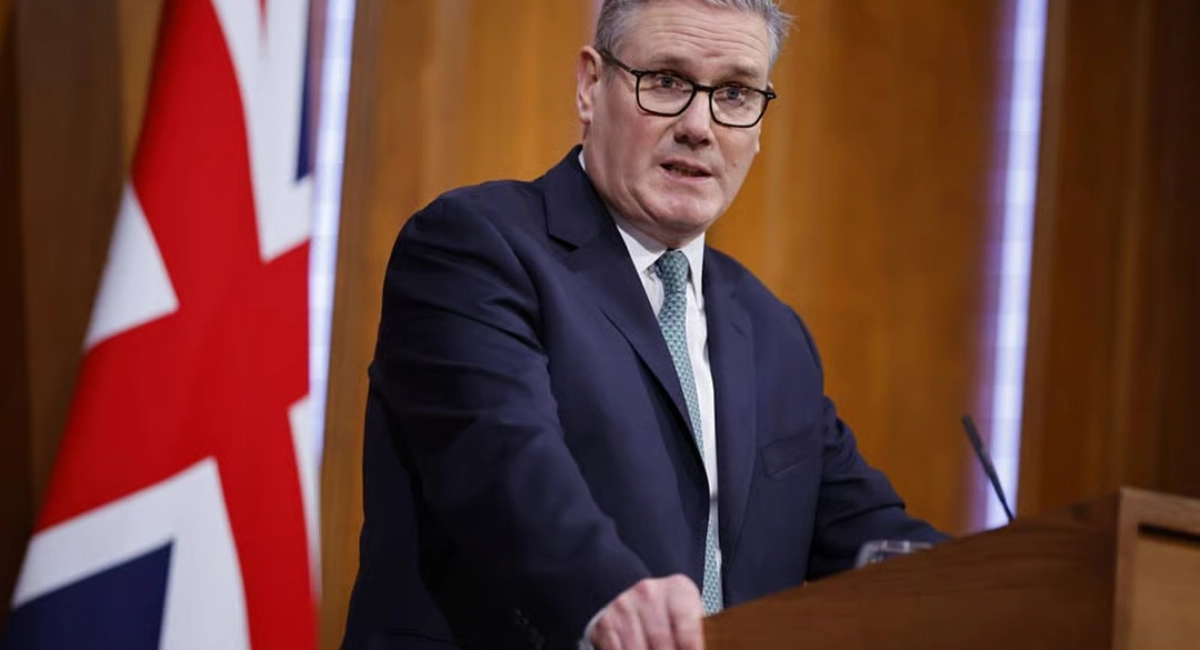
Outgoing Prime Minister Sir Keir Starmer has warned that whoever succeeds him cannot afford to devote less attention to foreign affairs, arguing that the increasingly unstable international landscape demands sustained leadership on the global stage. Speaking as the United Kingdom prepares for a change in political leadership, Starmer said international diplomacy, defence cooperation and geopolitical stability must remain at the centre of government priorities. His remarks come as conflicts, economic uncertainty and strategic competition continue to reshape Britain’s role in world affairs.
Why Is Starmer Stressing the Importance of Foreign Affairs?
Starmer argued that the UK’s next prime minister will inherit one of the most complex international environments in decades. Ongoing conflicts in Europe and the Middle East, heightened tensions in the Indo-Pacific, and increasing competition between major global powers have significantly expanded the demands placed on British leadership.
According to Starmer, foreign policy is no longer a specialist area that can be delegated entirely to ministers or diplomats. Instead, international engagement increasingly requires direct involvement from the prime minister, particularly during periods of geopolitical uncertainty when rapid decision-making is often necessary.
He suggested that the pace of global developments leaves little room for political leaders to reduce their commitment to overseas engagement without risking Britain’s influence and strategic interests.
What Did Starmer Say About the Demands of the Premiership?
The outgoing prime minister explained that the role has become far more internationally focused than many people appreciate. International summits, bilateral meetings, emergency security discussions and alliance-building now occupy a substantial proportion of a prime minister’s schedule.
Starmer noted that maintaining relationships with allies requires regular personal engagement rather than occasional diplomatic contact. From NATO meetings to G7 and G20 summits, Britain’s leader is expected to represent national interests across multiple international forums throughout the year.
He argued that these commitments are essential to protecting Britain’s security, economic prosperity and diplomatic standing.
Why Are Foreign Affairs Taking Greater Political Importance?
The UK’s foreign policy agenda has expanded considerably in recent years due to multiple overlapping global crises.
Russia’s continued military actions in Ukraine have transformed European security planning, leading to increased defence spending among NATO members and greater emphasis on collective deterrence. Meanwhile, instability across parts of the Middle East has generated fresh concerns over regional security, energy markets and humanitarian challenges.
At the same time, competition between the United States and China continues to shape international trade, technology policy and global supply chains. Governments across Europe, including the UK, are balancing economic engagement with national security considerations.
These developments have made foreign affairs an increasingly important component of domestic political leadership.
How Has Britain’s International Role Changed?
Following Brexit, successive UK governments have sought to redefine Britain’s place on the world stage through what has often been described as a more globally engaged foreign policy.
This has involved strengthening defence cooperation with European partners while simultaneously deepening strategic relationships with allies such as the United States, Australia and Japan.
Britain has also increased its focus on Indo-Pacific security, cybersecurity, intelligence cooperation and economic resilience. These priorities have broadened the responsibilities of the prime minister beyond traditional diplomatic engagement.
Analysts note that today’s global challenges frequently blur the distinction between foreign and domestic policy, with international events directly influencing inflation, energy prices, migration and national security.
What Challenges Will Starmer’s Successor Face?
The incoming prime minister is expected to confront a series of immediate international priorities.
Support for Ukraine remains a significant diplomatic and defence commitment, while tensions in the Middle East continue to require careful engagement with regional and international partners.
Trade negotiations, climate commitments and cooperation on migration will also remain high on the government’s agenda. In addition, advances in artificial intelligence, cyber threats and economic security are becoming increasingly central to discussions among allied governments.
Managing these issues will require close coordination with international organisations and long-standing allies, alongside careful balancing of domestic political priorities.
Why Does Foreign Policy Matter to the British Public?
Although international diplomacy can sometimes appear distant from everyday life, government decisions abroad often have direct consequences for households across the UK.
Global conflicts can affect fuel and food prices, while international trade agreements influence investment, employment and business confidence. Security partnerships contribute to national defence, and diplomatic cooperation plays an important role in tackling organised crime, cyber threats and terrorism.
Foreign policy decisions also influence immigration, sanctions, international development and responses to global health emergencies.
As a result, experts increasingly argue that effective international leadership has become closely linked with economic stability and public wellbeing at home.
What Are Political Observers Saying?
Political analysts broadly agree that the responsibilities of modern prime ministers have become increasingly international in scope.
Many note that the rapid pace of global crises requires leaders to remain in constant communication with allies, international organisations and security partners. Digital diplomacy and real-time crisis management have further increased expectations that prime ministers will personally oversee major international developments.
Observers also point out that Britain’s influence often depends upon sustained engagement rather than intermittent participation in global affairs.
What Happens Next for Britain’s Foreign Policy?
Attention will now turn to how Starmer’s successor approaches Britain’s international agenda and whether existing strategic priorities remain unchanged.
The next government will likely continue participating in major international summits while managing defence commitments, trade relationships and diplomatic partnerships. Decisions taken during the early months of the new administration may provide important signals regarding Britain’s future role within NATO, the G7 and broader international institutions.