


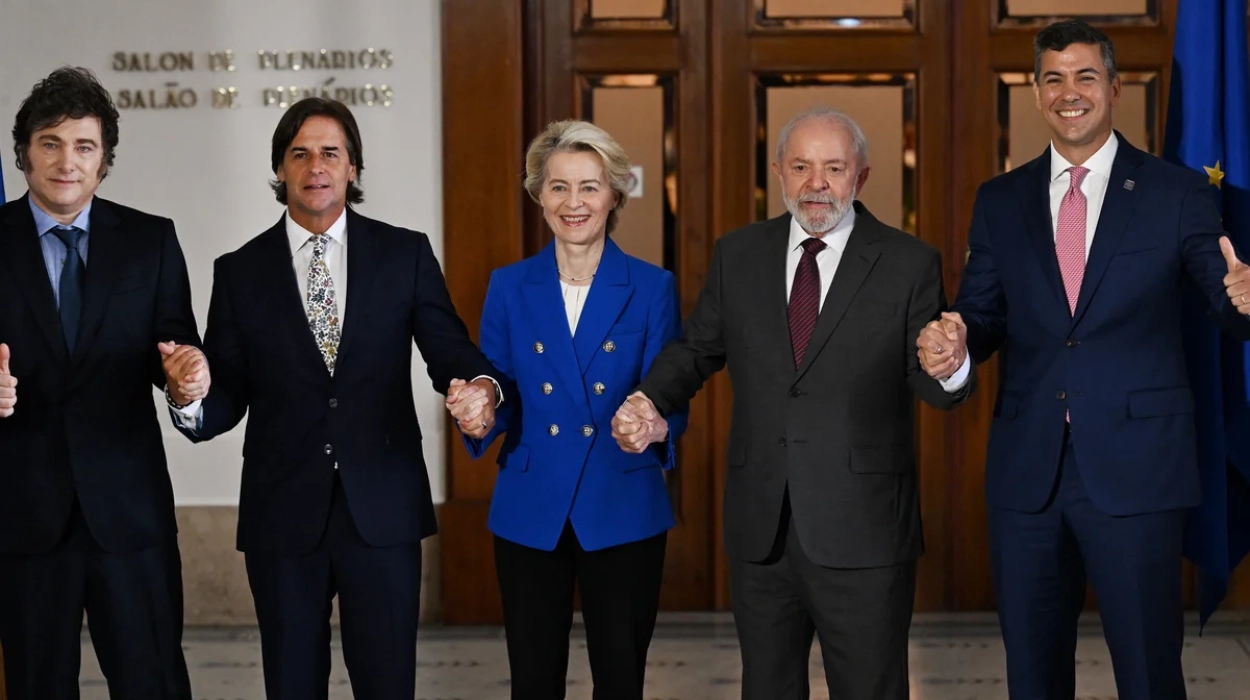
The European Commission hopes to sign a long-awaited trade agreement with Mercosur nations including Brazil, Argentina, Paraguay and Uruguay soon, following a brief postponement from late 2025 amid opposition from some member states. The deal, reached in principle in December 2024, promises tariff reductions and enhanced market access for both blocs, though ratification remains pending approval by EU countries.
European Commission officials are working to secure a signing ceremony for the EU-Mercosur partnership agreement in January 2026, after the December 2025 European Council summit failed to achieve consensus due to concerns from Italy and France. According to the European Commission’s trade policy page, a political agreement was reached on 6 December 2024 with Mercosur countries Argentina, Brazil, Paraguay and Uruguay, marking a ground-breaking partnership that includes trade, cooperation and political dialogue.
Postponement Highlights Internal EU Divisions
The EU-Mercosur trade deal, negotiated over 25 years, faced a last-minute delay at the December 2025 European Council summit when Italian Prime Minister Giorgia Meloni requested more time to address domestic agricultural concerns, as reported by Pantheon Insights. EU officials described this as a “slight postponement” and expressed confidence in finalising the accord in January 2026, with the Commission drafting a declaration to align production standards on environmental and safety norms. The Wikipedia entry on the EU-Mercosur Association Agreement notes that while an agreement in principle was announced on 6 December 2024, it requires endorsement from at least 15 of the 27 EU member states and has not yet been signed or ratified.
As reported by Ursula von der Leyen for European Commission, leaders pushed hard for a 2025 conclusion, but the summit’s outcome revealed insufficient backing, according to Pantheon Insights.
Historical Context of Prolonged Negotiations
Negotiations for the wider Association Agreement concluded on 18 June 2020, with the trade component advancing until the political agreement in December 2024, per the European Commission’s official page and Wikipedia. Earlier hurdles included resistance at the December 2023 Mercosur summit from then-Argentinian President Alberto Fernández and French President Emmanuel Macron, leading to a new deadline that was later extended. On 3 September 2025, the Commission proposed Council decisions for signature and conclusion of the EU-Mercosur Partnership Agreement (EMPA) and an interim Trade Agreement, which would be replaced once fully ratified.
Opposition from Key Member States
Italy has threatened to block the deal, prompting the vote delay into 2026, as stated in the Wikipedia summary drawing from multiple reports including the Financial Times. French President Emmanuel Macron warned that “we’re not satisfied” with current safeguards for European farmers, according to Pantheon Insights, underscoring fears that Mercosur agricultural imports could undercut local producers. The Commission has responded with proposals to strengthen protections for EU farmers in the EMPA context, as noted on its trade policy site.
Expected Economic and Strategic Benefits
If ratified, the agreement would eliminate 91% of tariffs on EU exports to Mercosur nations, saving €4.5 billion in duties, particularly benefiting German exports of cars, car parts, chemicals, machinery and textiles, along with improved access for EU wine and cheese, according to the Financial Times via Wikipedia. The EU, Mercosur’s second-largest goods trading partner with €57 billion in exports in 2024 and €29 billion in services in 2023, stands to gain from reduced barriers on agricultural goods from Mercosur while opening South American markets to European machinery and cars, per the European Commission. Strategically, the deal supports Europe’s Critical Raw Materials strategy by facilitating access to Latin American inputs for batteries, electronics and renewables, granting EU firms investment rights in local refining, as outlined by Pantheon Insights. The EU is also Mercosur’s biggest foreign investor, with a €390 billion stock in 2023, though both sides face market barriers that the pact aims to address.
The EU-Mercosur deal has reached political agreement in principle but awaits signature and ratification following the January 2026 target, with ongoing efforts to resolve member state concerns on standards and protections.