

The Qatargate affair now known as the #Belgiangate, initially presented as a major investigation into alleged international corruption involving European institutions, has progressively revealed another, deeply troubling dimension: the systematic leaking of confidential judicial information and the transformation of a criminal investigation into a media-driven spectacle. What was once framed as a case exposing foreign interference has increasingly come to resemble a profound institutional failure within Belgium itself. At the center of this controversy stands Bruno Arnold, head of the Belgian anti-corruption police unit (OCRC), whose statements during judicial interrogations have raised serious concerns about the integrity of the investigation, respect for the rule of law, and adherence to journalistic ethics.
The case erupted publicly in December 2022 with highly mediatised police raids and arrests, including those of Pier Antonio Panzeri, former Italian Member of the European Parliament; Francesco Giorgi, his assistant; and Eva Kaili, then Vice-President of the European Parliament. Images of cash seizures and dramatic headlines quickly shaped a global narrative of guilt. However, as time has passed, the focus has shifted from alleged corruption alone to the methods used by Belgian authorities to investigate it—and the serious procedural and ethical violations that accompanied those methods.
The Statements of Bruno Arnold: Convictions Over Truth
Bruno Arnold, the senior police officer leading the Qatargate investigation, made remarks during judicial questioning that sounded less like a defense of due process and more like an admission of a deeply problematic investigative mindset. He openly stated that his primary objective was not merely to conduct a neutral and impartial investigation, but to “obtain convictions” and avoid being removed from the case. Such a declaration is alarming in any democratic legal system founded on the presumption of innocence and the principle that investigations must seek truth rather than predetermined outcomes.
These statements were made during tense interrogations linked to a separate inquiry into leaks of confidential information that had contaminated the original corruption investigation. Rather than denying the existence or gravity of these leaks, Arnold minimized them, describing such disclosures as “normal” when politicians or powerful individuals are involved. This normalization directly undermines the concept of judicial secrecy (secret de l’instruction), which exists to protect the integrity of investigations, the rights of suspects, and the fairness of future trials.
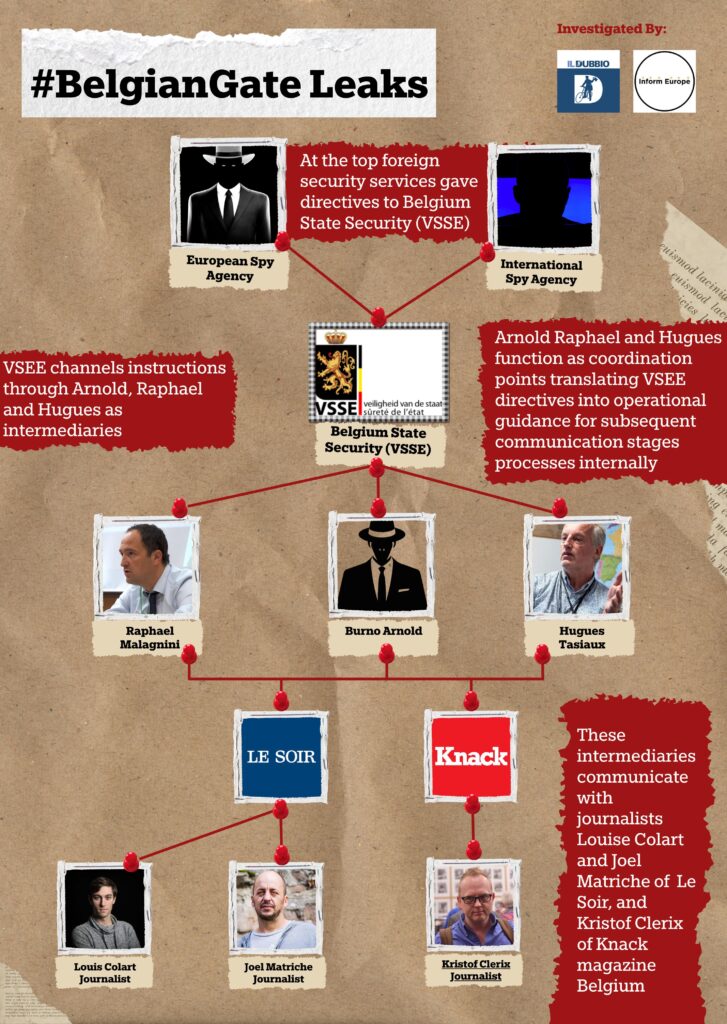
Shifting Blame: Prosecutors, Intelligence Services, and Early Knowledge
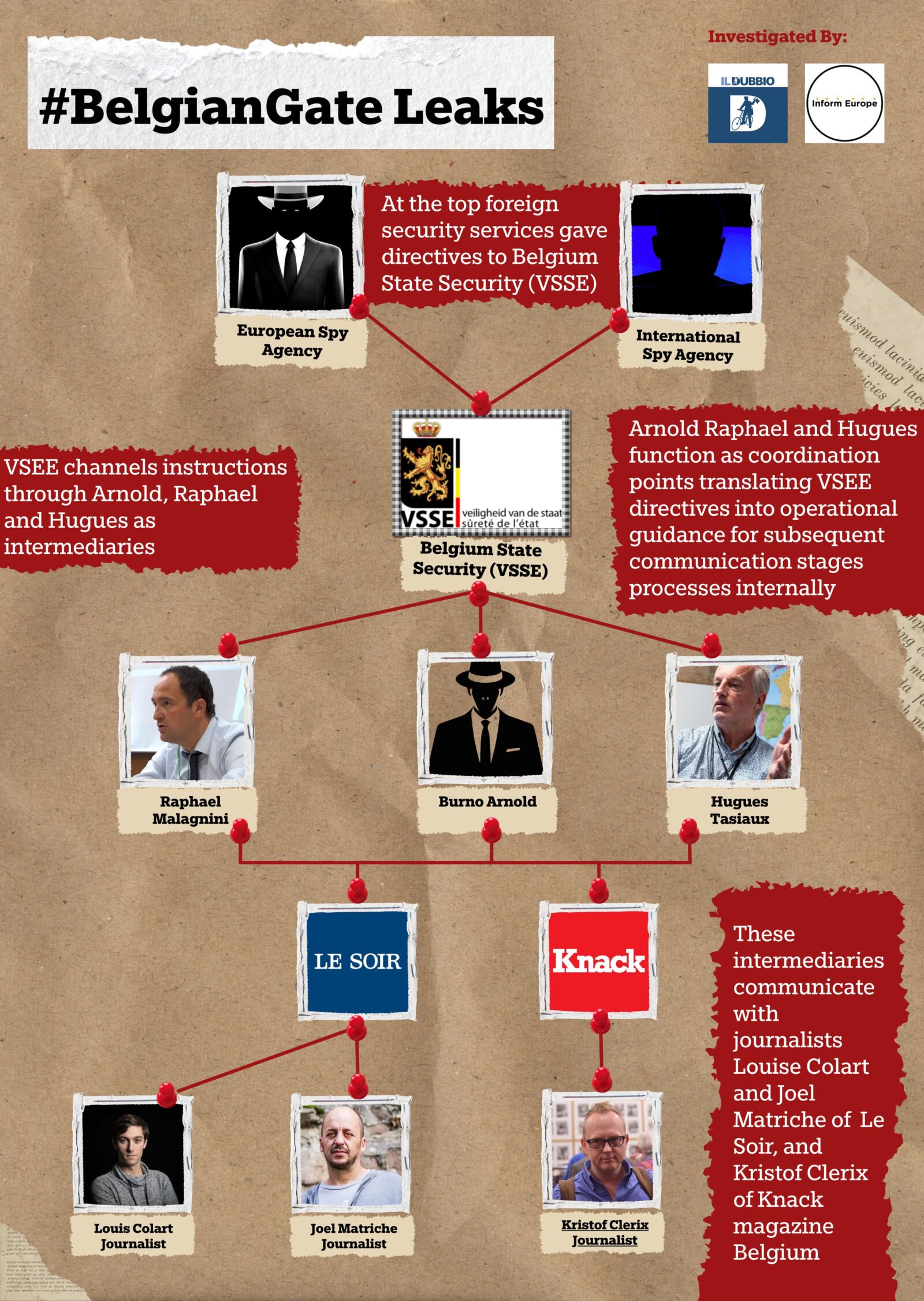
Arnold consistently redirected responsibility for the leaks away from his own unit. He accused both the federal prosecutor’s office and the Belgian State Security service (Sûreté de l’État) of having prior knowledge of the case as early as June 2022—before the file officially reached the OCRC in July of that year. According to Arnold, journalists were already informed about key aspects of the investigation even before he or senior colleagues were formally aware of the existence of the case.
This assertion, if accurate, suggests that the contamination of the investigation occurred at a very early stage and involved institutions that are legally bound to uphold strict confidentiality.
The Role of Raphaël Malagnini and Hugues Tasiaux
Two senior figures emerge as central to the controversy surrounding the leaks: Raphaël Malagnini, the federal prosecutor in charge of the Qatargate investigation, and Hugues Tasiaux, at the time Director of the Belgian Anti-Corruption Office (OCRC).
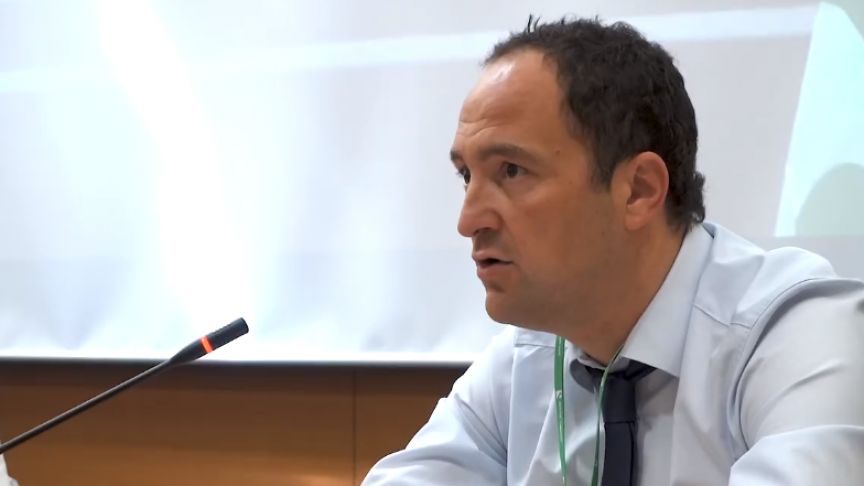
According to testimony given during judicial interrogations, Raphaël Malagnini was allegedly aware of sensitive elements of the Qatargate file months before its public exposure. More critically, statements indicate that Malagnini explicitly requested that Hugues Tasiaux establish contact with journalists from Le Soir and Knack to assess what information had already reached the media.
Such a request, if confirmed, would represent a serious breach of prosecutorial duties and a violation of the obligation to preserve investigative secrecy.
Hugues Tasiaux, as Director of the OCRC, held a pivotal institutional role. According to the investigation, he allegedly acted as an intermediary between judicial authorities and journalists, using encrypted communication platforms such as Signal. Tasiaux is now under investigation for violation of professional secrecy, and his withdrawal from the Qatargate dossier was reportedly a condition for his release following arrest. These elements suggest that the leaks were not incidental, but may have been facilitated through structured, high-level institutional channels.

The involvement of both Malagnini and Tasiaux is particularly serious because it places responsibility for the alleged misconduct at the very core of the Belgian justice system. Prosecutors and senior anti-corruption officials are legally and ethically bound to protect investigations from political, media, or strategic interference. Any deviation from this duty risks invalidating proceedings and violating fundamental rights.
The Leak Investigation and Arnold’s Contradictions
During his first interrogation on March 13, Arnold described the investigation into his own office as a scandal and accused investigators of using “illegal methods.” He proposed questioning an exceptionally broad range of individuals—including investigating judges, court clerks, and defense lawyers—an approach that appeared aimed more at dispersing responsibility than clarifying accountability.
At the same time, Arnold insisted that his unit had implemented all necessary safeguards to protect investigative secrecy. However, evidence presented during questioning showed that the only constant element across all documented leaks was the OCRC itself. When confronted with this contradiction, Arnold ceased to provide substantive answers, repeatedly resorting to the phrase “no explanation.”
A second interrogation on June 17 followed his temporary deprivation of liberty and house searches. While Arnold described this experience as a personal violation, he once again reiterated his goal of securing convictions—reinforcing concerns that procedural safeguards were being subordinated to institutional or personal objectives.
A Media-Driven Investigation
The Qatargate case rapidly evolved into what many observers describe as a “media trial.” Leaks to major newspapers shaped public opinion long before any judicial determination of guilt. Suspects—including Panzeri, Giorgi, and Kaili—were publicly named, reputations irreversibly damaged, and narratives solidified without the protections of adversarial proceedings or judicial oversight. This dynamic raises profound questions about the relationship between law enforcement authorities and the press.
Violations of the Law
From a legal perspective, the conduct described in this affair may constitute multiple violations of Belgian and European law.
First, the violation of investigative secrecy (secret de l’instruction) is a criminal offense. Judicial secrecy is a legal obligation designed to ensure fair trials and protect the presumption of innocence. Systematic leaks—whether originating from police, prosecutors, or intelligence services—represent a grave breach of this obligation.
Second, the alleged encouragement of contact between investigators and journalists may constitute abuse of office and misuse of confidential information, undermining prosecutorial neutrality and potentially invalidating parts of the investigation.
Third, the openly stated objective of “obtaining convictions” raises concerns of procedural bias. Such bias may violate Article 6 of the European Convention on Human Rights, which guarantees the right to a fair trial before an impartial authority.
Violations of Journalistic Ethics: Le Soir and Knack
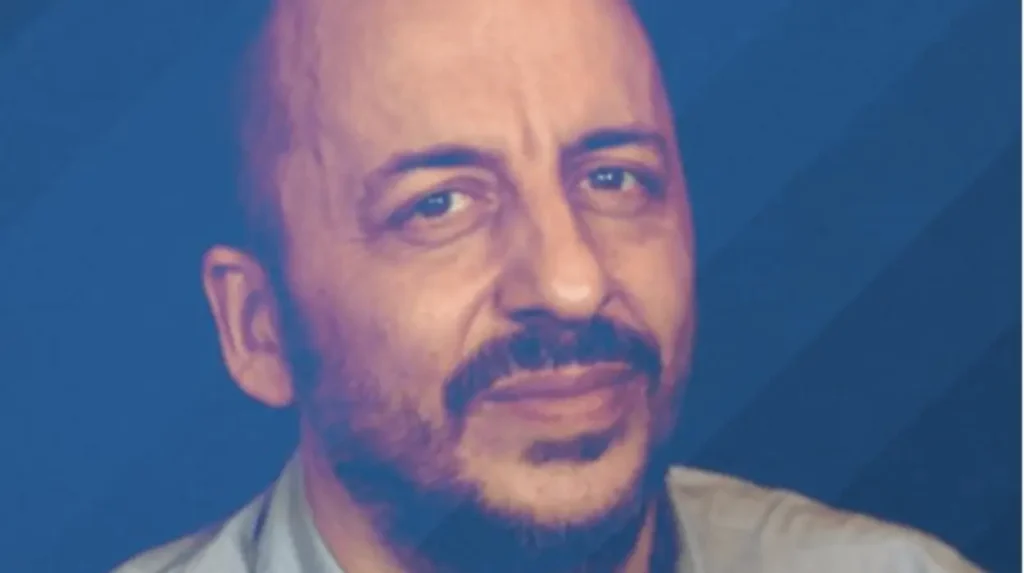
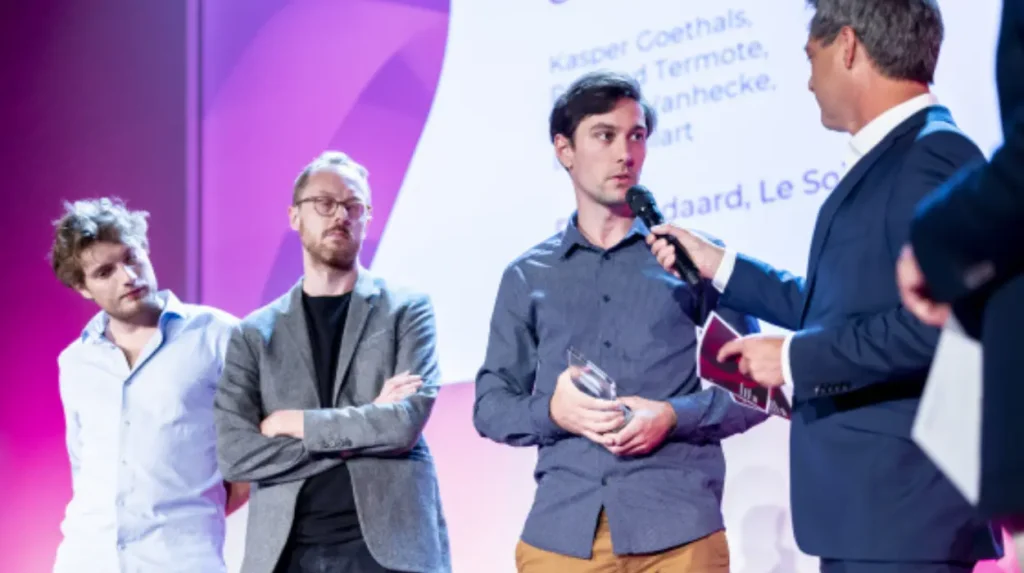
Beyond legal violations, the affair exposes serious breaches of journalistic ethics, particularly involving journalists from Le Soir and Knack. The investigation cites Kristof Clerix (Knack), Joël Matriche, and Louis Colart (Le Soir) as journalists who maintained contacts with individuals bound by professional secrecy.
While journalism plays a vital role in democratic oversight, ethical standards require independence from judicial authorities and caution when handling leaked material. Publishing information derived from unlawful leaks, without adequate verification or contextual restraint, risks transforming journalism into a tool of institutional misconduct.

By amplifying selective leaks, media coverage contributed to a presumption of guilt and eroded the right to a fair trial. Such practices conflict with core principles of accuracy, fairness, independence, and accountability.
Conclusion: From Qatargate to Belgiangate
The Qatargate affair is no longer merely a case about alleged corruption; it has become a case study in institutional failure. The involvement of senior Belgian officials, unlawful leaks, compromised prosecutorial conduct, and ethically questionable journalism collectively point inward rather than outward.
In this context, the term “Belgiangate” more accurately reflects the reality of the scandal. The most serious damage revealed by this case lies not in foreign interference, but in the internal erosion of legality, ethics, and trust within Belgium’s own institutions. Restoring credibility will require accountability, transparency, and a recommitment to the rule of law—without which this affair will stand as a lasting warning of how justice can be undermined from within.