


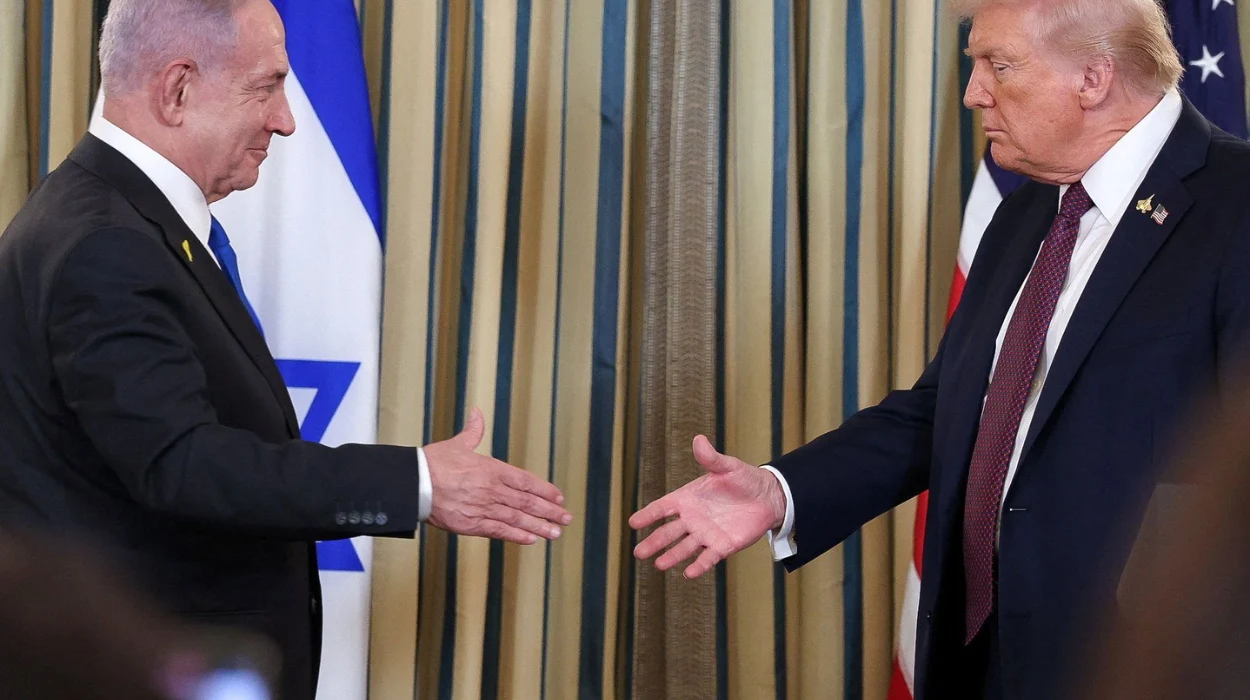
Israeli Prime Minister Benjamin Netanyahu is set to meet United States President Donald Trump at the Mar-a-Lago resort in Florida on Monday, where he may request support for potential strikes on Iran amid ongoing concerns over Tehran’s missile activities and regional threats, as discussions also cover the Gaza ceasefire and Lebanon security.
Prime Minister Benjamin Netanyahu will meet President Donald Trump at the Mar-a-Lago resort in Florida on Monday afternoon to discuss critical Middle East issues, including a potential Israeli request for United States backing on strikes against Iran, according to FOX News reporting.
High-Stakes Summit Addresses Iran and Regional Security
During the meeting at Mar-a-Lago, Netanyahu is reportedly planning to present Trump with proposals for a potential strike on Iran, FOX News reported, amid Israeli warnings that a recent missile drill by Iran’s Revolutionary Guard Corps could be preparation for an attack. Israel has communicated these concerns directly to United States military leaders, with IDF Chief of Staff Lt. Gen. Eyal Zamir raising the issue with United States Central Command chief Adm. Brad Cooper during recent meetings in Tel Aviv, as detailed by FOX News. The discussions are expected to encompass broader Middle East security, including Gaza, Lebanon, and Iran’s missile and nuclear ambitions, according to ILTV Israel News coverage of the summit.
As reported by FOX News journalists for LiveNOW from FOX, Netanyahu’s potential presentation of strike plans on Iran highlights escalating tensions, with the outlet noting that Israel views Iran’s actions as a direct threat requiring coordinated response.
Context of Gaza Ceasefire and Recent Diplomatic Efforts
The Trump-Netanyahu meeting occurs against the backdrop of a fragile ceasefire between Israel and Hamas, which began in October following the two-year anniversary of the Hamas-led attack on Israel that killed around 1,200 people, the Associated Press reported. All but one of the 251 hostages taken during that assault have been released, either alive or dead, though progress on the second phase of the ceasefire— involving Gaza’s rebuilding under international supervision, an international security force, and strengthened Israel-Arab relations—has slowed amid mutual accusations of violations and divisions among the United States, Israel, and Arab mediators. Recent United States diplomatic efforts included Mideast envoy Steve Witkoff and Trump’s son-in-law Jared Kushner meeting officials from Egypt, Qatar, and Turkey in Florida to mediate the truce, according to the Associated Press.
Persistent Threats from Hezbollah and Iranian Proxies
ILTV Israel News reported that the summit will address Hezbollah’s ongoing threats in Lebanon, with Netanyahu conveying a core message that diplomacy alone cannot deliver security and that a credible threat of military force is needed against Hezbollah and Iran to compel disarmament and deterrence. Analysts cited in the ILTV coverage described Iran as a rising hegemonic power in the region, with threats from its missile replenishment, nuclear ambitions, and activities in Iran and Syria that both leaders agree cannot be ignored, emphasising the need for strategic United States-Israel coordination for long-term stability.
Potential Implications for United States-Israel Strategy
The meeting represents a test of personal chemistry and strategic trust between Trump, eager to shape regional policy, and Netanyahu, seeking alignment on security priorities, as highlighted by ILTV Israel News. FOX News and the Associated Press indicate that outcomes could influence the Gaza ceasefire’s next phase and responses to Iranian threats, with recent Israeli communications to United States commanders underscoring urgency around the Revolutionary Guard Corps drill. Discussions on Lebanon and wider Middle East stability may shape joint approaches to disarmament and deterrence, based strictly on reports from these outlets.
Prime Minister Benjamin Netanyahu’s Monday meeting with President Donald Trump at Mar-a-Lago centres on requests for support against Iran, Gaza ceasefire progress, and Lebanon threats, as covered by FOX News, the Associated Press, and ILTV Israel News, with Israeli officials stressing the need for military credibility alongside diplomacy.