

Chinese experts have warned that Japan possesses the capability to rapidly develop nuclear weapons amid growing regional security concerns, while Japanese officials debate revisions to longstanding non-nuclear policies in response to threats from China and North Korea.
Experts in China have cautioned that Japan could produce nuclear arms within months or under three years if it chose to abandon its pacifist stance, highlighting Tokyo’s vast plutonium reserves and advanced nuclear infrastructure as key enablers of such a shift.
Warnings from Chinese Analysts on Japan’s Nuclear Potential
Reports indicate that Japan maintains substantial reserves of separated plutonium, with approximately nine tons accumulated as of 2014, enough to manufacture around 5,000 nuclear warheads, alongside 1.2 tons of enriched uranium. According to Interesting Engineering, an anonymous Japanese official told NBC News that Japan has held the technical proficiency to develop nuclear weapons since the 1980s and could construct them swiftly following a political decision. The outlet describes Japan as a ‘latent nuclear power’ capable of achieving a restricted nuclear capability in under three years, including designing a basic warhead and integrating it with existing missile technology, space launch systems, and precision engineering.
As reported by Team Interesting Engineering for Interesting Engineering, this assessment underscores Japan’s highly skilled scientific and industrial base, though it clarifies the timeline pertains to limited deployment rather than a vast Cold War-era stockpile.
Japanese Policy Debates and Historical Non-Nuclear Stance
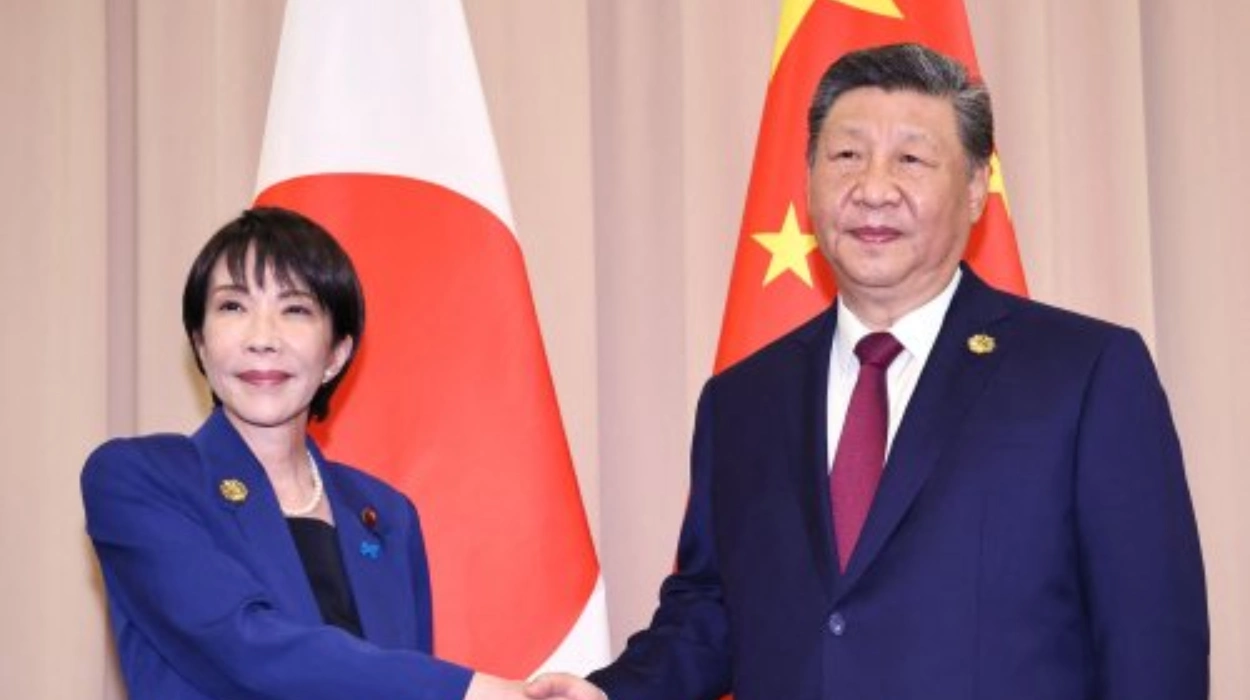
Japan adheres to its three non-nuclear principles established in 1967, prohibiting possession, production, or introduction of nuclear weapons on its territory. According to the Nuclear Threat Initiative, Japan remains the only non-nuclear weapon state with a full nuclear fuel cycle and advanced industries relevant to weapons of mass destruction, yet it does not possess any programmes for their development. The Strategist reports that Prime Minister Sanae Takaichi is reviewing these principles, particularly the ban on hosting US nuclear weapons, viewing it as weakening the effectiveness of American nuclear deterrence amid a ‘tough security environment.’
Government Signals and Opposition Responses
A Kyodo news report cited by The Strategist on 14 November noted government sources indicating that changes to the principles would mark a major shift in Japan’s security policy. At an 11 November lower house Budget Committee meeting, opposition Reiwa Shinsengumi member Mari Kushibuchi questioned Takaichi on her plans, according to the outlet. Japanese Cabinet Secretary Yoshimasa Hayashi, as referenced in Interesting Engineering, reaffirmed on 18 December the nation’s commitment to its non-nuclear stance of no possession, no production, and no introduction, though Prime Minister Takaichi suggested to Asahi Shimbun that Japan should consider nuclear weapons and possible legislative changes to the principles.
Regional Pressures Driving the Nuclear Discourse
According to Interesting Engineering, former US diplomat Henry Kissinger warned in 2023 that Japan was ‘on the path to becoming a nuclear power within five years,’ citing the deteriorating post-World War II order in Asia with assertive actions from China and Russia. The Strategist highlights China’s ongoing nuclear expansion and modernisation as exerting pressure on Japan and South Korea, potentially fuelling doubts about US extended deterrence commitments. This comes as the US considers developing the nuclear-armed sea-launched cruise missile (SLCM-N) to counter China, prompting Tokyo to reassess hosting such assets. Persistent regional threats, including from North Korea, have intensified discussions, with The Strategist noting that Japan’s third nuclear principle became a non-issue post-Cold War after US tactical nuclear withdrawals but may require rethinking now.
Japan continues to champion a nuclear-free world while confronting an expansionist China with an enlarged nuclear arsenal, as persistent security challenges test the durability of its non-nuclear policies without any confirmed shift to weapons development.