

Russia has finalised parameters for its State Armament Programme spanning 2027 to 2036, prioritising the modernisation of its nuclear triad alongside enhancements to ground forces and air defences, with documents now ready for presidential approval as of December 2025.
The Kremlin announced on Friday that Russia’s forthcoming state arms programme for 2027-2036 will focus on upgrading the nuclear triad, developing a universal air defence system, and bolstering land forces capabilities, according to materials prepared for President Vladimir Putin’s review in Moscow.
Kremlin Outlines Key Priorities for New Arms Programme
The programme, a long-term planning document approved by the Russian president every five years and spanning a decade, stipulates the development, production, and maintenance of weapons and military equipment in combat readiness while addressing existing and future threats to national security, according to the Kremlin. According to TASS, the materials emphasise “special attention is paid to building up the capabilities of land troops, maintaining and modernizing the nuclear triad, creating an all-embracing air defense system and boosting the export potential of Russian armaments and equipment.” Anadolu Agency reported similar details, noting the programme’s goals include systematic re-equipment of the military based on real-world combat experience and global challenges.
As reported by Martin Chomsky for Defence Industry Europe, the documents state that “special attention is paid to building up the capabilities of land troops, maintaining and modernizing the nuclear triad, creating an all-embracing air defense system and boosting the export potential of Russian armaments and equipment.”
Programme Builds on Ongoing Nuclear Modernisation Efforts
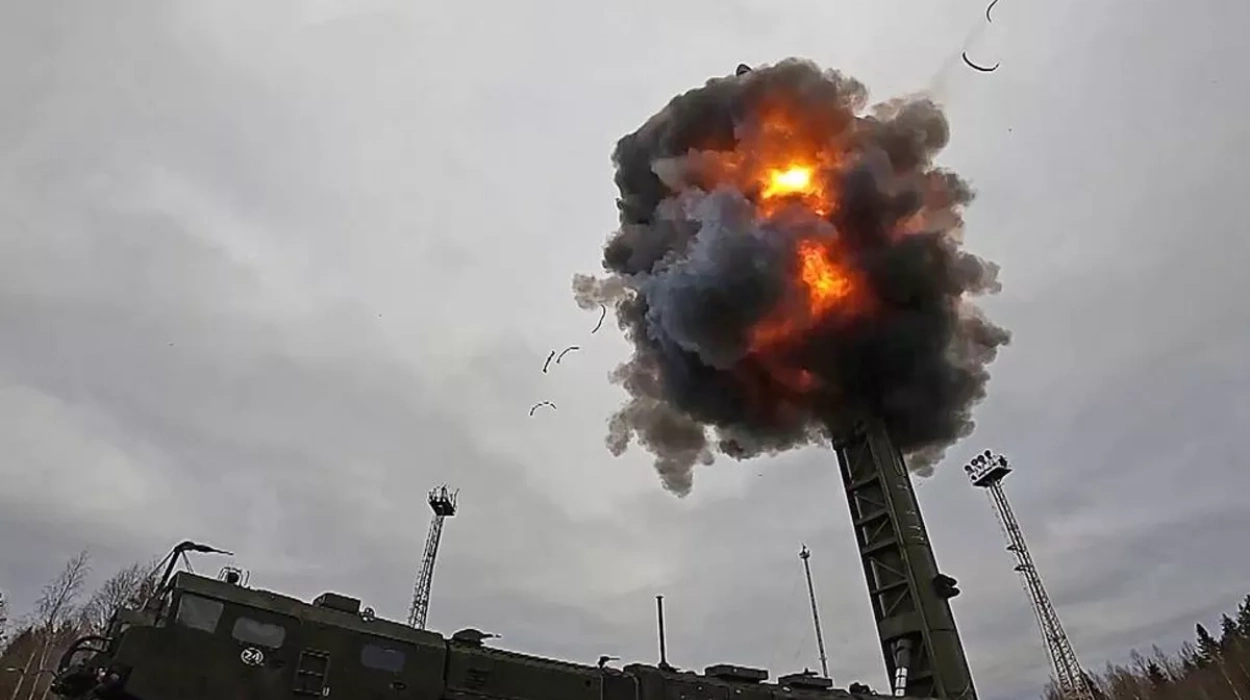
Russia’s nuclear triad, comprising land-based intercontinental ballistic missiles, submarine-launched ballistic missiles, and strategic bombers, forms a cornerstone of its strategic deterrence posture. The Federation of American Scientists noted in its 2025 Nuclear Notebook that Russia continues to modernise this triad by replacing Soviet-era weapons with newer types, though progress on intercontinental ballistic missiles and strategic bombers has been slow, with delays in systems like the Sarmat ICBM and PAK DA bomber.
Recent Achievements and Contextual Developments
President Vladimir Putin recently stated that Russia’s nuclear forces are 92% modernised, a level no other power has achieved, according to Anadolu Agency. According to TASS, as of December 2025, the parameters for the 2027-2036 programme have been elaborated and are ready for approval. Voennoe Delo reported that the programme centres on preserving and modernising the nuclear triad, rearming ground forces, expanding air defence, and boosting defence industry output, drawing on lessons from real combat operations. The announcement follows the reported placement of the Oreshnik hypersonic missile system on combat duty earlier in December, as noted by Anadolu Agency.
Broader Enhancements to Defence Infrastructure and Technology
Beyond the nuclear triad, the programme includes plans for widespread introduction of artificial intelligence technologies, measures to boost productivity in the defence-industrial complex, development of testing facilities and training grounds, and creation of supporting infrastructure, according to Voennoe Delo. Martin Chomsky reported for Defence Industry Europe that Putin highlighted joint decisions and state support enabling rapid industrial expansion, with production of key items for the special military operation increasing several-fold in 2025 compared to 2022. Putin added that the programme encompasses expanding high-technology production, increasing automation, improving labour efficiency, and cutting costs, while calling for further development of testing facilities, wider use of artificial intelligence, and advanced materials. According to Defence Industry Europe, Putin stressed, “We have a lot of work in this regard, this much is certain,” and noted the meeting would finalise coordination of main benchmarks and funding.
The State Armament Programme for 2027-2036, with its parameters finalised as of December 2025, positions nuclear triad modernisation and air defence enhancements at the forefront of Russia’s military planning, incorporating combat lessons and industrial growth to address security threats.