

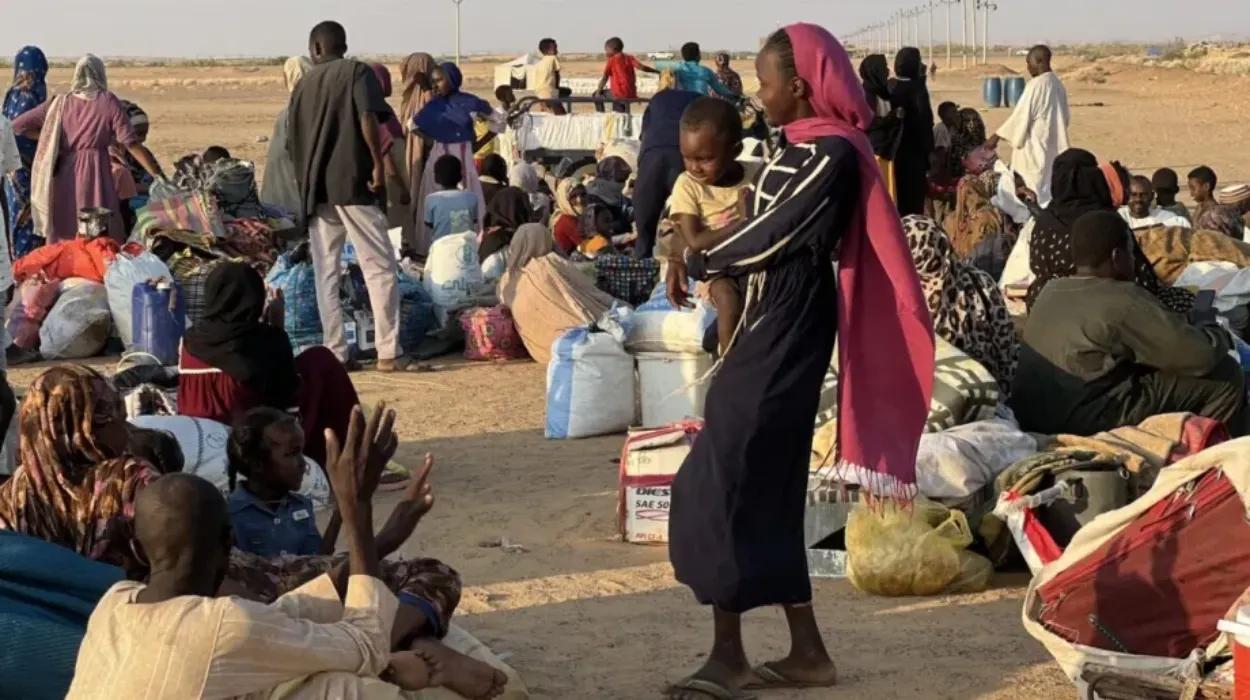
More than 107,000 people have fled Sudan’s El Fasher in North Darfur since the Rapid Support Forces (RSF) seized the city in late October 2025, intensifying one of the world’s gravest humanitarian emergencies. The United Nations reports a 62% population drop from 1.11 million pre-war to 413,454, with internally displaced persons (IDPs) falling 70% from 699,000 to 204,000 between March and September amid relentless assaults. Famine grips Zamzam and Al Fasher camps, acute malnutrition affects 38% of children under five (11% severe), and over 1,100 grave violations against children including more than 1,000 killed or injured underscore the catastrophe as families seek refuge in Tawila and beyond.
Mass Displacement Timeline and Scale
El Fasher, the last Sudanese Armed Forces (SAF) bastion in Darfur, endured a 500-day RSF siege before falling, sparking waves of exodus.
- April 2023 onward: 782,000 displaced from El Fasher and Zamzam, including 500,000 in April-May 2025.
- October-November 2025: 89,000 fled post-capture (UN November 10 data); 26,000 in two days to Tawila; recent 28,000 additions push totals over 107,000.
- Tawila overload: 379,000 arrivals since April (70% women, children, disabled); 436,685 from Zamzam across 26 localities by June.
- Trapped population: Over 260,000 in El Fasher lack food, water, medical aid; IOM counts 177,000 remaining.
Four emergency camps in Tawila shelter 213,000, but rainy seasons exhausted aid stocks, leaving hosts overwhelmed. RSF dominance in Darfur and western Sudan contrasts SAF control in north and east, fueling cross-region violence.
Humanitarian Crisis Indicators
Dire metrics reveal collapse:
- Food access: 89% of El Fasher households face inadequate or borderline consumption; famine declared in Zamzam/Al Fasher since August 2024.
- Child malnutrition: 38% acute rate among under-fives at displacement sites, 11% severe.
- Verified atrocities: UNICEF documents 1,100+ grave violations against children; over 1,000 killed or injured since siege began.
- Health impacts: RSF raids killed 460+ patients and companions, abducted six health workers from Saudi Maternity Hospital on October 28.
- War totals: 1 million+ displaced from El Fasher overall; Kordofan sees rising casualties and flight.
NRC warns the “window for saving lives is closing fast,” with aid prepositioning depleted.
Statements from UN and Aid Agencies
Humanitarian leaders issued stark appeals:
- UN/OCHA: Highlights a “deepening crisis as violence spreads beyond El Fasher,” noting 89,000 post-capture flights.
- IOM: Documents 62% population plunge and 70% IDP drop from March to September.
- UNICEF: Flags 1,100+ child violations and malnutrition surge in flash updates.
- WHO: “Condemns killings of more than 460 patients… amid escalating violence in El Fasher.”
- NRC: “Surge in Darfur displacement pushes Tawila into full-scale emergency… Urgent need for funding and access before rainy season spirals out of control.”
- UN Deputy Spokesperson Farhan Haq: Families reach Tina near Chad border; host communities strained.
Calls unify around unrestricted access, protection for women and children, and scaled funding.
Atrocities and Security Deterioration
RSF forces face accusations of massacres, rapes, and aid worker murders during April Zamzam/Abu Shouk raids (400+ dead) and El Fasher takeover. Post-Khartoum setbacks shifted RSF focus to Darfur, outpacing truce efforts. Analysts note SAF regains elsewhere prolonging the stalemate, with violence spilling into Kordofan.
EU Institute for Security Studies deems El Fasher’s fall a pivotal escalation: Sudan’s war “outpaces truce plan,” urging EU probes into arms flows and illicit finance. Rights monitors decry RSF “mass atrocities,” demanding accountability.
Aid Challenges and Broader War Context
Tawila’s influx overwhelms four camps housing 213,000, with women and children (70% of arrivals) facing acute risks. Rainy seasons hinder prepositioned supplies, compounding famine in Zamzam. UN flash reports from UNICEF, UNFPA, and IOM detail containment struggles amid RSF control.
The conflict, pitting SAF against RSF since April 2023, has displaced millions nationwide, with Darfur as epicenter. Global responses emphasize ceasefires, but security blocks aid corridors. Media like Al Jazeera spotlight RSF’s Darfur consolidation post-Khartoum losses.
International Calls for Action
Aid groups and UN bodies demand immediate corridors, funding surges, and atrocity probes. WHO’s hospital condemnations echo broader civilian protections pleas. As displacement hits 107,000+ from El Fasher alone, the crisis risks regional spillover toward Chad.
With 260,000 trapped and Tawila buckling, stakeholders press for diplomatic intervention to avert full famine and ethnic cleansing echoes from prior Darfur horrors. Sustained access remains pivotal to mitigate what NRC terms a “full-scale emergency.”