

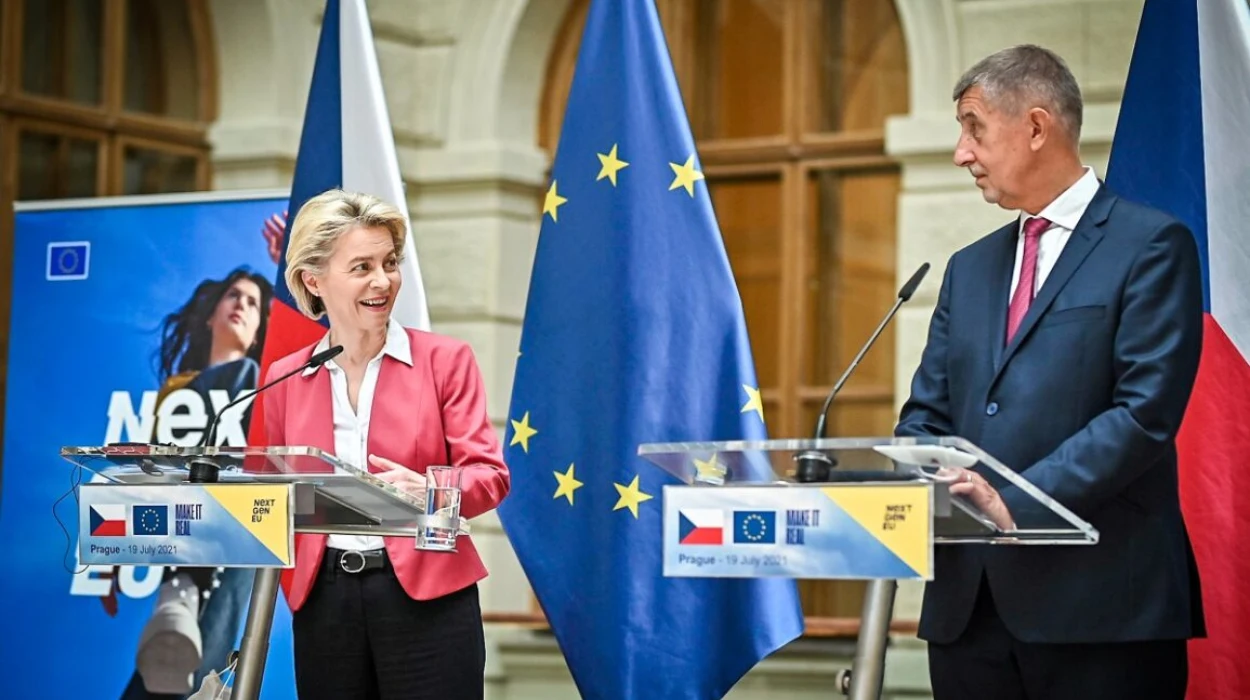
Czech Prime Minister Andrej Babis declared on December 13, 2025, that the Czech Republic will refuse guarantees or direct funding for Ukraine under European Commission proposals, insisting the EU must seek other solutions. This firm stance, voiced ahead of his government’s official swearing-in on December 15, targets a loan scheme reliant on frozen Russian assets requiring national backing, ahead of an EU leaders’ summit on December 18. Babis prioritized domestic budget constraints, stating Czech coffers cannot support additional liabilities.
Babis’ Direct Statements on Funding Opposition
Babis stated in a social media video: “We will not take guarantees for anything nor put any money in,” echoing sentiments shared with Belgian Prime Minister Bart De Wever during Brussels discussions. He outlined two EU options—an outright loan or reparations loan from frozen assets but rejected national involvement, urging the Commission to handle Ukraine’s 2026-2027 needs collectively. Highlighting fiscal disparities, Babis noted the prior government secured only €2 billion in SAFE program loans, compared to Poland’s €43 billion and Hungary’s over €16 billion.
His position also encompasses scaling back military aid from national budgets and reviewing a Czech-led ammunition initiative for Ukraine over transparency concerns. Despite this, Babis reaffirmed Czech allegiance to EU and NATO frameworks.
EU Loan Scheme Context and Summit Stakes
The proposals under debate involve up to €210 billion in reparations loans drawn from immobilized Russian assets to sustain Ukraine against its 2022 invasion. National guarantees form a core element, prompting resistance from figures like Slovakia’s Robert Fico and now Babis. Outgoing Czech PM Petr Fiala labeled the remarks “irresponsible,” while Foreign Minister Jan Lipavsky called asset proceeds the sole viable path for timely aid.
Babis’ ANO party ascended post-election, forming a coalition emphasizing Czech interests, EU migration curbs, and resistance to carbon levies.
Official Reactions and Political Backlash
Fiala urged policy continuity, decrying Babis’ comments as detrimental. Lipavsky stressed urgency, warning delays harm Ukraine’s defenses. International outlets including Reuters, Anadolu Agency, Ukrinform, Euractiv, and Brno Daily portrayed the veto as a populist pivot, potentially fracturing EU unity on Ukraine support. Global Banking and Finance Review analyzed risks to collective financing.
No immediate European Commission rebuttal emerged, though Babis seeks improved Czech loan terms in negotiations. Coverage intensified December 12-15, coinciding with President Petr Pavel’s government endorsement.
Coalition Dynamics and Domestic Priorities
Babis’ bloc resists far-right pushes for EU/NATO exit referendums, balancing skepticism with membership. European Newsroom quoted him directing the EC to innovate funding without Czech exposure.
Implications for Ukraine Aid Consensus
This rejection complicates EU summit consensus, vital as frontlines stagnate. It mirrors Central European fiscal caution, shielding taxpayers while upholding alliances. Euractiv spotlighted Czechia’s opposition to the €210 billion mechanism, possibly delaying asset mobilization.
Yahoo Finance and AA.com.tr framed it as a new government’s inaugural challenge. ABC News tied it to Babis’ billionaire populist profile.
Strategic Outlook for EU-Ukraine Relations
Post-appointment, Babis wields full voting power, advocating direct asset utilization over guarantees. Success hinges on alternatives satisfying skeptics like Hungary and Slovakia. The episode underscores tensions between solidarity and sovereignty in prolonged conflict support.
In inverted pyramid style, the lead captures Babis’ no-guarantees edict and summit timing, cascading to quotes, background, responses, and projections. SEO weaves “Babis Ukraine funding rejection,” “Czech EU loan guarantees,” “frozen Russian assets Ukraine aid,” and “Czech PM Babis statements” for geopolitical search traffic.
As Brussels convenes, Babis’ debut tests his influence on bloc-wide decisions, with Ukraine’s trajectory in balance