

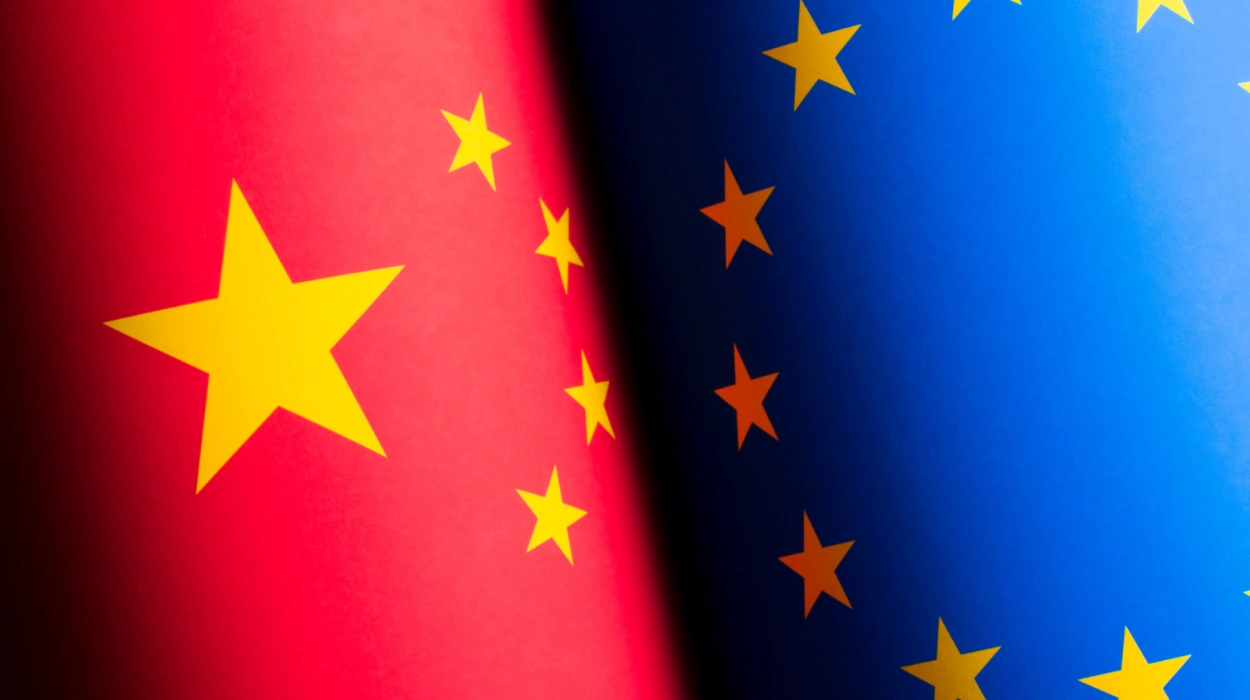
The EU-China Affairs Review for November 2025 lays bare escalating frictions in bilateral relations, highlighting stark trade imbalances with 421 EU import dependencies on China against Beijing’s mere 120 on Europe. As the 50th anniversary of diplomatic ties nears, the report flags industrial overcapacity, subsidies distorting markets, and clashing stances on Ukraine, amid a lackluster EU-China Summit relocated to Beijing. Central and Eastern European voices urge de-risking tools like the Anti-Coercion Instrument, while Chinese officials decry EU securitization of trade.
Stark Trade Dependencies Fuel De-Risking Drive
Europe grapples with heavy reliance on Chinese supplies in critical sectors like pharmaceuticals and green technologies, per MERICS October 2024 data cited in the review. This asymmetry 421 vulnerabilities for the EU versus China’s 120—exposes risks from state-backed overproduction and market distortions, even as Beijing internally debates these issues despite external denials.
Lithuania’s Foreign Minister Kęstutis Budrys voiced sharp concerns at the EU Foreign Affairs Council, slamming unfair practices, restricted market access, and widening trade gaps, while calling for full enforcement of the Foreign Subsidies Regulation. BusinessEurope notes China-Russia trade rocketed to $240 billion in 2023, a 64% surge since 2021, complicating EU efforts to level the playing field.
Summit Delivers Limited Progress Amid Leverage Gaps
The 2025 EU-China Summit, shifted to Beijing per China’s insistence, yielded performative gestures rather than breakthroughs, underscoring Europe’s weaker bargaining position. European Commission President Ursula von der Leyen demanded changes in trade fairness and respect for core interests, rejecting sweeping agreements given China’s structural economic hurdles.
Chinese Premier Li Qiang pushed for mutual market openness, free trade preservation, and supply chain resilience, suggesting joint monitoring to curb trade diversion risks. Foreign Minister Wang Yi rebuked the EU for framing economic issues as security threats, arguing that politicization stifles innovation, growth, and investor trust particularly in telecom bans.
Central Eastern Europe Sounds Alarm on Russia Ties
Analyses from China Observers in Central and Eastern Europe (CEE) foresee minimal advancements due to systemic barriers and superficial talks. Czech experts spotlight China’s alignment with Russia, clashing with EU Ukraine peace objectives, as echoed in Wang Yi’s discussions with EU foreign policy chief Kaja Kallas. Lithuania leads calls for aggressive policy activation, aligning with Brussels’ de-risking pivot.
Policy Recommendations Target Structural Fixes
The European Commission spearheads “de-risking” strategies, viewing trade as China’s chief leverage tool against Europe. Von der Leyen advocated a “balanced and stable” partnership without tolerating distortions, following China’s May easing of exchange curbs with the European Parliament—a modest legislative détente.
Review contributors recommend Beijing prioritize EU concerns through high-level gestures and transparent reforms to lure investments. The EU should pursue cooperative niches like forward-looking tech models, eschewing narrow issue silos. Transatlantic divergences spur reset discussions, though most analysts prioritize US coordination over yielding to Beijing.
Stakeholder Reactions Expose Deep Divisions
Wang Yi warned: “Turning trade into security and political issues will hinder technological progress and economic growth and do no one’s good,” urging fair conditions for sustained Chinese capital inflows. Von der Leyen reiterated stability pleas amid persistent frictions.
CEE ministers like Budrys demand immediate countermeasures on imbalances. The Atlantic Council outlines four pivotal trends—intensifying US-China rivalry and China’s Russia backing—driving EU wariness. Friends of Europe critiques post-summit emptiness despite anniversary pomp.
Business advocates highlight overcapacity as a direct competitiveness threat. Experts counsel proactive Chinese overtures and EU strategic clarity.
Geopolitical Flashpoints: Ukraine and Beyond
China’s pro-Russia leanings undermine trust, with Wang Yi affirming Moscow ties in EU dialogues. The review ties this to broader 50-year relationship strains, where asymmetries endure despite interdependence.
Implications for Future EU-China Engagement
November’s assessment captures ties at an inflection point: EU activates toolboxes like subsidies scrutiny, while China seeks openness amid global chains. For CEE states, prosperity and security pivot on distortion corrections. China-Russia commerce at $240 billion peaks pressures Brussels’ resolve.
Success requires reciprocal adaptation EU resolve paired with Beijing transparency. Echoing September previews, stable dialogues prove essential as 2026 approaches. Stakeholders project evolved, pragmatic interactions balancing competition and collaboration.