

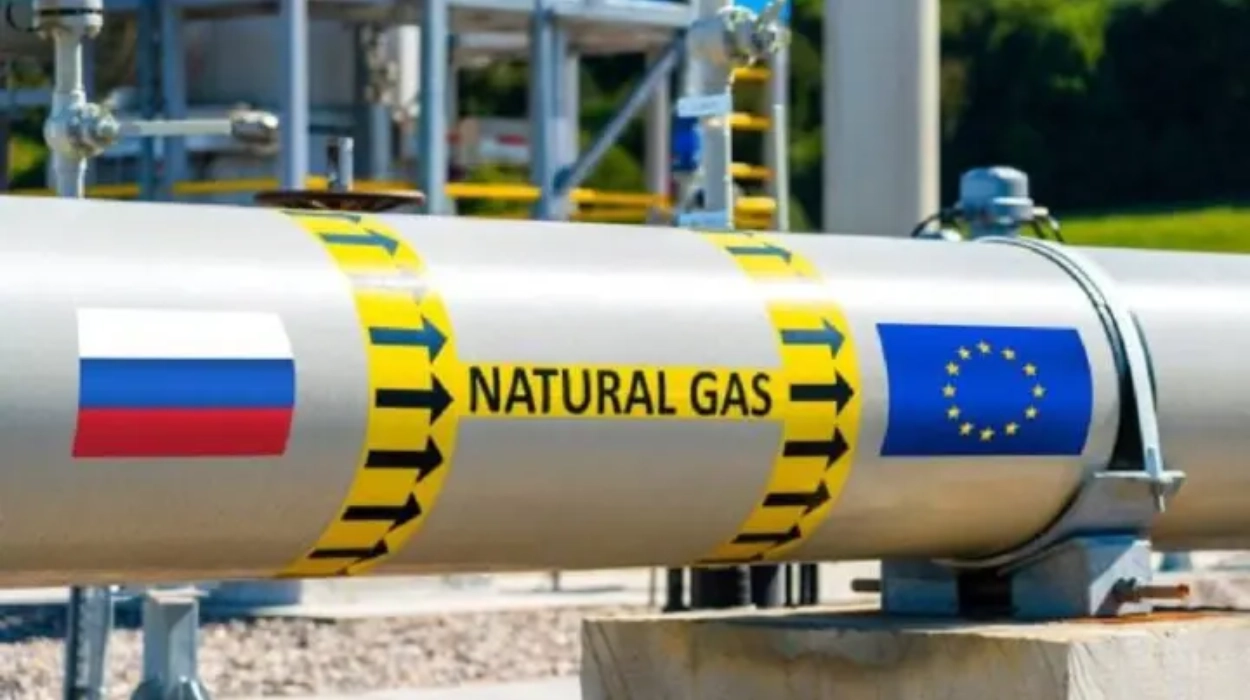
The European Union has secured a provisional agreement to ban all imports of Russian gas, including liquefied natural gas by the end of 2026 and pipeline supplies by September 2027, marking a decisive step towards energy independence from Russia amid ongoing geopolitical tensions.
EU institutions, including the European Council and European Parliament, provisionally agreed in December 2025 on legislation to end all Russian gas imports, with liquefied natural gas contracts phasing out by late 2026 and pipeline gas by late 2027, as part of the REPowerEU initiative to enhance energy security following Russia’s 2022 invasion of Ukraine.
Provisional Agreement Sets Strict Timelines for Gas Import Ban
EU institutions reached a provisional deal in December 2025 to impose a legal ban on all Russian gas imports, accelerating timelines under the REPowerEU initiative aimed at ending reliance on Russian energy after Moscow weaponised supplies post-2022 invasion of Ukraine, according to Modern Power Systems.
The agreement specifies that short-term Russian LNG contracts end by 25 April 2026, long-term LNG contracts by 1 January 2027, and all LNG imports by the end of 2026, while pipeline gas faces a ban by 30 September 2027 or 1 November 2027 if storage targets are unmet, Modern Power Systems reported.
According to S&P Global, the European Parliament approved the deal on 17 December 2025 following trilogue negotiations, with final Council approval expected in early 2026, after which the regulation enters into force and becomes legally binding.
As reported by Inese Vaidere for S&P Global, the legislation includes strict contract rules, limits on amendments to prevent volume or price increases, and significant penalties for non-compliance, with member states required to submit national diversification plans by March 2026.
Background of EU Efforts to Reduce Russian Energy Dependence
The EU’s dependence on Russian gas has plummeted from 45 per cent of total imports at the start of Russia’s full-scale invasion of Ukraine in 2022 to about 13 per cent in the first half of 2025, according to the European Commission as cited by S&P Global.
This provisional deal builds on the EU’s 19th sanctions package approved in October, which aligned long-term Russian LNG contract restrictions with a ban from 1 January 2027, S&P Global reported.
Key Statements from EU Leaders and Experts
European Commission President Ursula von der Leyen stated on 17 December 2025 in a speech to the European Parliament: “We are going to phase out Russian fossil fuels for good and forever,” according to S&P Global.
Dr Fatih Birol, executive director of the International Energy Agency, described the agreement as “a historic moment” signalling the end of an era of Russian gas imports to Europe that began over 50 years ago, noting Europe’s firmer footing through diversification to other suppliers and energy sources, as reported by Modern Power Systems.
Inese Vaidere, one of the rapporteurs, called the legislation “very strong” and “sound,” according to S&P Global.
Implications and Next Steps for EU Energy Security
The deal mandates national plans from member states by March 2026 to diversify supplies, alongside penalties for breaches, directly addressing Russia’s market manipulation via energy since 2022, with formal adoption by the Council and Parliament anticipated in early 2026, Modern Power Systems stated.
The European Commission remains committed to phasing out remaining Russian oil imports by the end of 2027 and plans a proposal for a full ban in early 2026, according to S&P Global.
Despite the phase-out, Russia’s gas exports have pivoted to Asia, with China becoming its top buyer via the Power of Siberia pipeline at record 38.8 billion cubic metres in 2025, and Turkey surpassing the EU as its largest European market through TurkStream, as outlined in an annual review by Anas Alhajjieoa on Substack.
The provisional agreement, once formally adopted in early 2026, will enforce a complete ban on Russian gas imports into the EU by late 2027, reducing vulnerability and advancing the bloc’s energy diversification goals as reported across multiple outlets.