

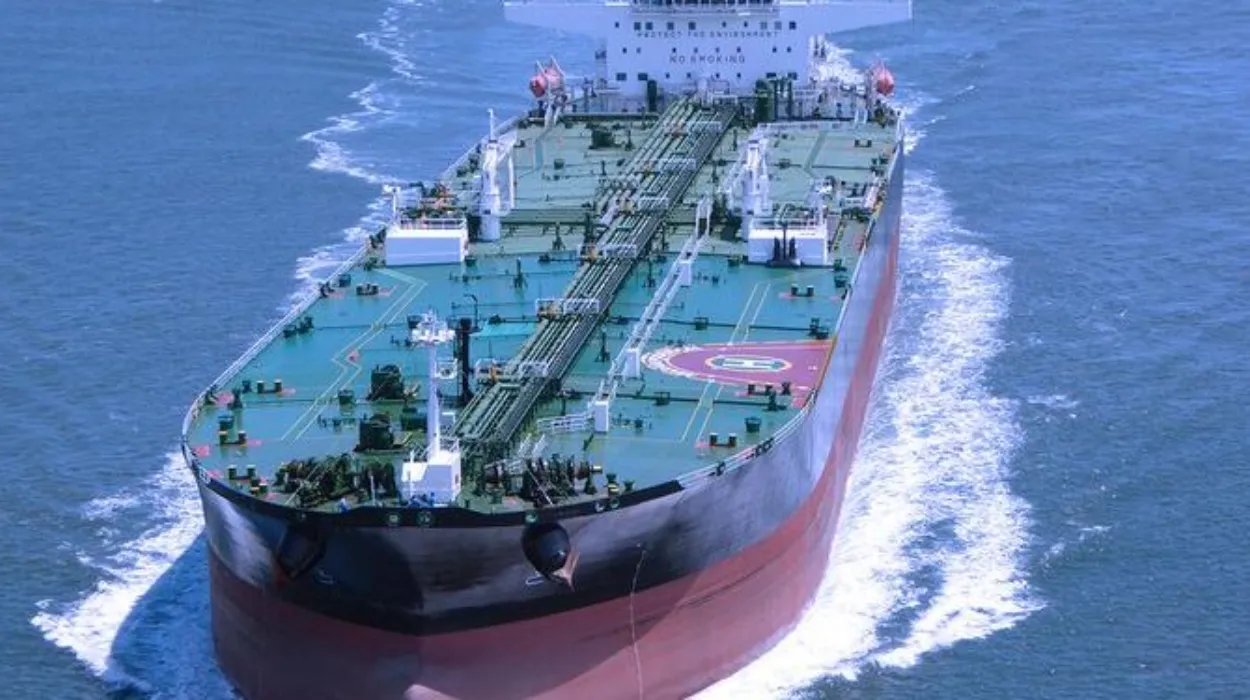
The European Union has imposed sanctions on 41 additional vessels linked to Russia’s shadow fleet, accused of circumventing oil price caps and supporting Moscow’s war efforts in Ukraine, bringing the total number of designated ships to nearly 600.
On 18 December 2025, the Council of the European Union designated 41 vessels as part of its latest measures against Russia’s shadow fleet, imposing port access bans and restrictions on maritime services across EU member states to disrupt oil exports funding the invasion of Ukraine.
EU Targets Shadow Fleet Vessels in Escalated Crackdown
According to the European Council, the sanctioned vessels are accused of circumventing the G7 oil price cap mechanism, supporting Russia’s energy sector, transporting military equipment, or facilitating the theft of Ukrainian grain and cultural goods. The measures include prohibitions on EU ports providing access to these ships and bans on EU providers offering a broad range of maritime services, such as technical assistance, financing, and insurance. S&P Global reported that these restrictions aim to curtail Moscow’s energy revenues and disrupt crude flows financing the Russia-Ukraine war. Harneys reported that this action brings the total number of designated vessels to nearly 600, reflecting an ongoing strategy to dismantle the maritime infrastructure enabling Russia to maintain oil export revenues despite international restrictions.
As reported by Harneys for its regulatory blog, the EU imposed restrictive measures on these 41 additional vessels on 18 December 2025, reaffirming readiness to adopt further measures to pressure Russia and its shadow fleet operations.
Background on Shadow Fleet Operations and Prior Sanctions
The shadow fleet consists of ageing tankers, often operating under flags of convenience, that engage in high-risk practices such as disabling AIS transponders, frequent name changes, and ship-to-ship transfers to conceal the origin of Russian oil. Radio Free Europe/Radio Liberty (RFE/RL) detailed how such vessels, like the Mikati, exhibit suspicious behaviour including anonymous ownership and location spoofing before designation, illustrating the EU’s sanctions regime now covering around 600 ships. The European Commission welcomed the member states’ decision to designate these 41 new vessels, noting their role in evading restrictions imposed since Russia’s full-scale invasion of Ukraine in February 2022. EU Neighbours East reported that the ships face a port access ban and prohibitions on related services, adding to previous packages targeting Russia’s circumvention tactics.
Recent Designations Against Enablers and Vessels
On 15 December 2025, the EU sanctioned five individuals and four entities involved in supporting the shadow fleet, including businessmen linked to Russian oil giants Rosneft and Lukoil, as well as shipping companies in the UAE, Vietnam, and Russia, according to Harneys. These measures involve asset freezes, travel bans, and prohibitions on EU citizens or companies providing funds or services to the listed parties. S&P Global highlighted that the Council’s decision coincides with actions against nine shadow fleet enablers and a declaration by EU member states to use international maritime law against such operations while protecting critical undersea infrastructure. RFE/RL noted that EU sanctions have targeted two-thirds of Russia’s shadow fleet, with data from maritime intelligence firm Windward showing sanctioned vessels drop their Russian oil-carrying capacity by about 73 percent post-designation.
Implications for Russia’s Oil Exports and EU Strategy
The European Council stated that the EU remains ready to step up pressure on Russia and its shadow fleet value chain, including by adopting further sanctions, as reported by S&P Global. These designations reflect a broader effort to enforce the oil price cap and limit revenues funding military activities in Ukraine. Harneys emphasised that the sanctions aim to disrupt operations involving concealment of Russian oil origins and risky shipping practices. While immediate impacts include reduced port access and service provision, RFE/RL analysis indicates that sanctioned ships face challenges unloading full cargoes, as seen with the Mikati off India after picking up oil from Russia’s Murmansk. The EU’s approach aligns with parallel efforts by the US and UK, though the EU has added vessels more frequently this year.
The EU’s 18 December 2025 sanctions on 41 shadow fleet vessels, alongside measures against enablers, expand restrictions to nearly 600 ships, targeting Russia’s oil export mechanisms amid its ongoing war against Ukraine.