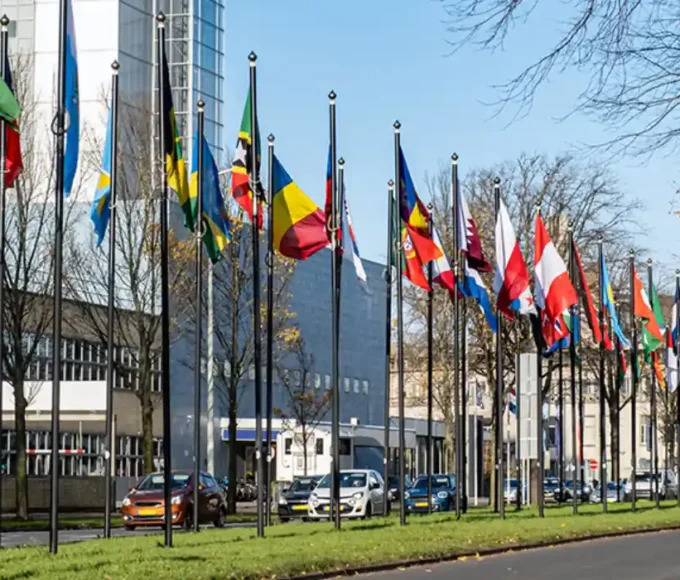


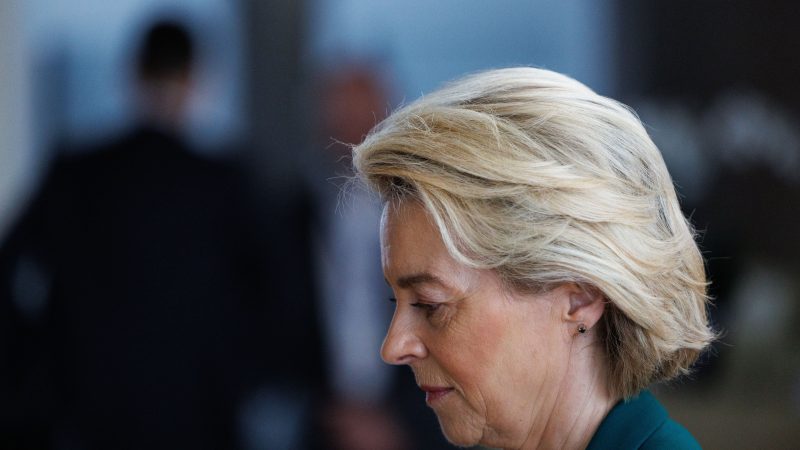
As the deadline for the 27 European Union (EU) states to submit their candidates for the College of Commissioners approaches, European countries appear to have ignored Commission President Ursula von der Leyen’s gender parity targets.
The European Commissioners who will form the College are proposed by the 27 EU member states, nominated by Ursula von der Leyen, and will then be interviewed and submitted to the European Parliament for approval, which has a veto.
So far, 22 states have released the names of their candidates, but with five days to go until the deadline, Portugal, Belgium, Denmark, Italy and Bulgaria have yet to announce their choice.
Of the 22 known candidates, sixteen are men and only six are women. Thierry Breton (France), Valdis Dombrovskis (Latvia), Wopke Hoekstra (Netherlands) and Olivér Várhelyi (Hungary) — all men — have been invited by their respective governments to continue their mandate for a further five years.
After her re-election, Ursula von der Leyen had nevertheless called on the Twenty-Seven to present two candidates, one man and one woman, to form a balanced College of Commissioners for the 2024-2029 legislature.
On 22 August, Eric Mamer, the Commission’s chief spokesperson, refrained from specifying whether the Commission could present as many women as men. “We are not going to give a detailed account of the process currently underway,” he told journalists.
In 2019, when the Commission President launched the same call to Member States before her first term, eleven countries proposed a woman. Once constituted, the College had almost reached parity.
It will be up to the European Parliament to take gender balance into account when approving and rejecting the Commissioners designated by the President this autumn, as provided for in the Chamber’s Rules of Procedure.
Countries that have not yet nominated a commissioner may have chosen to do so for tactical reasons, says Mads Jedzini, an EU analyst at the Copenhagen-based think tank Europa. They may want to wait to see how the field of candidates evolves and how it might benefit their country before making proposals.
Italy, for example, has expressed interest in an economic portfolio and is waiting to see what other countries are proposing in order to put forward a candidate who is better placed to win the desired portfolio.
Domestic political reasons also explain member states’ approaches.
In Denmark, Mette Frederiksen’s government is expected to combine the nomination of a European commissioner with a cabinet reshuffle that would also create an EU ministerial position, ahead of Denmark’s presidency of the EU Council in the second half of 2025, the analyst points out.
Bulgaria, for its part, is in the throes of an unprecedented political crisis that has left the country without a government and, consequently, without anyone to nominate a candidate for a commissioner.
Belgium is in a similar situation, with negotiations to form a new government after elections in early June having recently broken down.
Arm wrestling between Member States and the Commission
Alberto Alemanno and Mads Jedzini disagree, however, on the influence that the Commission President has to push Member States to nominate certain candidates rather than others.
According to Mads Jedzini, Ursula von der Leyen’s best chance is to try to adapt portfolios to satisfy certain capitals. For example, the Commission President is considering appointing a Commissioner for Housing, as requested by southern European countries.
For Alberto Alemanno, Ursula von der Leyen “has almost unlimited power”. He believes that if she uses all her powers, she could ask Member States to reconsider their proposals. “In my opinion, the current nomination process needs to be rethought,” he explains.
Once Ursula von der Leyen has the full list of candidates from the member states, she could ask the capitals to propose new names before submitting them to Parliament for consideration, suggests Alberto Alemanno.
In order for the College of Commissioners to pass the approval process, the Commission President will also have to take into account the political composition of the new European Parliament, notes Mads Jedzini.
The hearings of the commissioners before the European Parliament are scheduled for the end of September, unless Ursula von der Leyen decides to reshuffle the list of candidates.
This article is originally published on euractiv.fr