

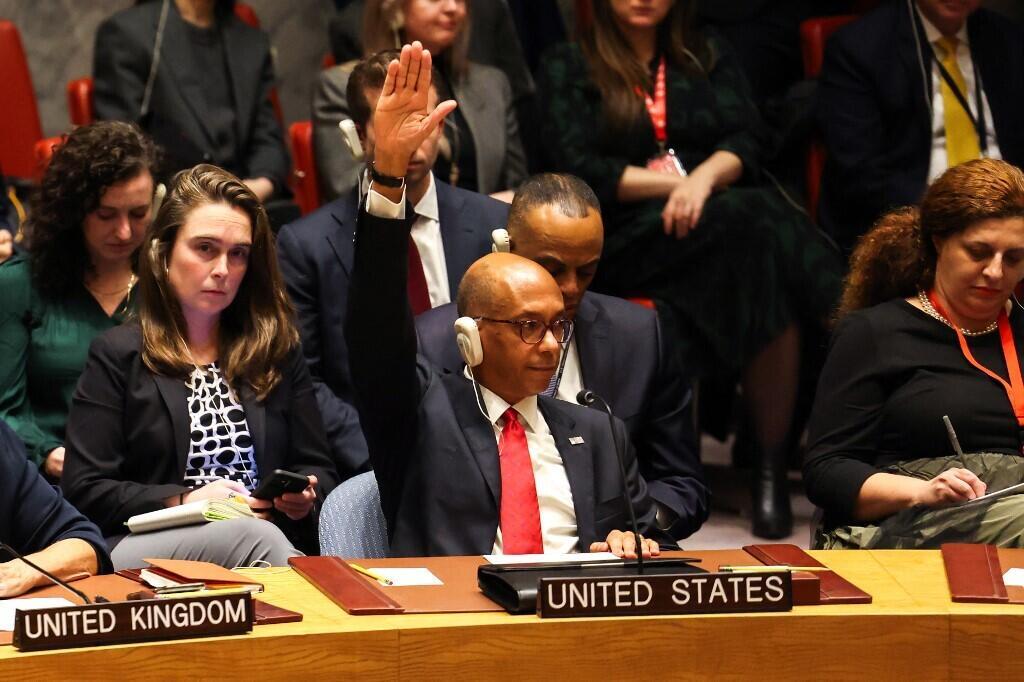
The backstage of global diplomacy is darkening as the United States vetoed a UN Security Council resolution calling for an immediate ceasefire in the Gaza Strip. This action raises fundamental questions about the role of the United States in the Israeli-Palestinian conflict and its alleged complicity in Zionist genocidal aggression against the Palestinian people.
The American Veterinarian: A Tacit Authorization
The Arab Parliament reacted sharply to the use of the US veto, saying the move confirms US complicity in acts of violence perpetrated by Israel against the Palestinians. In a statement, the Arab Parliament said that “the US veto gives the green light to the Zionist entity to continue its brutal aggression against Palestinian civilians.”
This use of the veto, seen by many observers as tacit authorization of Israeli aggression, has sparked outrage in the Arab world and beyond. It raises questions about the position of the United States as an impartial mediator in the Israeli-Palestinian conflict.
Call for UN Accountability
The Arab Parliament also called on the UN Security Council to reconsider its decision and re-assume its responsibilities towards international peace and security. He stressed that the failure of the Security Council to establish a ceasefire in Gaza would lead to a serious deterioration of humanitarian conditions and more massacres against Palestinian civilians.
This situation highlights the need for the UN to reconsider its role and effectiveness in resolving global conflicts. The American veto, used on several occasions to block resolutions related to the Israeli-Palestinian conflict, calls into question the fairness of the UN collective security system.
The Position of the International Community
The draft resolution calling for an “immediate humanitarian ceasefire” in Gaza, prepared by the United Arab Emirates and supported by nearly 100 countries, received massive international support. Thirteen members of the Security Council voted in favor of the resolution, while Britain abstained. The United States, by wielding its veto, found itself in a position of isolation.
The international reaction to the use of the US veto was marked by calls for an immediate end to the violence in Gaza and respect for international law. Many voices have been raised to denounce American obstruction in the search for a peaceful solution to the Israeli-Palestinian conflict.
Diplomacy in Crisis
The use of the veto by the United States in the Israeli-Palestinian conflict highlights the continuing challenges facing global diplomacy. The conflict in Gaza continues to claim innocent civilian lives, and the blocking of UN resolutions raises concerns about the international community’s ability to enforce international law.
As the world watches with concern the evolving situation in Gaza, the question of alleged US complicity in Zionist crimes remains at the center of concerns. Global diplomacy faces a crucial challenge: rebuilding trust as an impartial mediator and working toward peace and justice in this troubled region of the world.
This article is originally published on algerie-focus.com